2026-08-25 · 10 min read
Best AI Greeting Card Generator in 2026: Picks, Features & How to

Recommended next
What Makes the Best AI Greeting Card Generator in 2026
If you're searching for the best AI greeting card generator, you want more than a tool that slaps clipart on a blank canvas — you need one that understands context, respects cultural nuance, and delivers print-ready or share-ready output in minutes. In 2026, the leading AI greeting card generators combine natural-language prompting, style-aware templates, and real-time preview engines so you can create polished cards for weddings, birthdays, holidays, baby showers, and corporate events without any design experience.
The short answer: the best AI greeting card generator is one that matches your event type, supports the exact size you need (from social-media squares to 5×7 prints), and exports high-resolution files ready to share or print. Below, we break down what to look for, how the top platforms compare, and how to get professional results in under five minutes.
Why AI Greeting Card Generators Have Evolved in 2026
Two years ago, most AI card tools produced flat, generic layouts. Today, generative AI models handle typography pairing, color-harmony matching, and cultural pattern recognition with far more sophistication. According to OpenAI's documentation, multimodal models now process visual and textual inputs simultaneously, which means a greeting card generator can interpret your event description and suggest layouts that match the mood, audience, and format you specify.
This shift matters because greeting cards are deeply personal. A Christmas card for your extended family needs a different tone than a corporate holiday greeting to clients. A baby shower invite for a first-time parent looks nothing like a 50th-birthday celebration. The best AI greeting card generator adapts to those distinctions automatically.
Key Advances Driving Quality in 2026
- Context-aware templating: AI reads your event type, audience, and tone, then filters thousands of layouts to a curated shortlist.
- Real-time WYSIWYG preview: What you see on screen matches what you download — no more surprise alignment issues.
- Multi-format export: One click produces a social-media-ready PNG, a high-resolution PDF for print, and an animated MP4 for messaging apps.
- Cultural sensitivity layers: Built-in pattern libraries and color palettes respect traditions from Diwali to Lunar New Year.
Features to Look for in the Best AI Greeting Card Generator
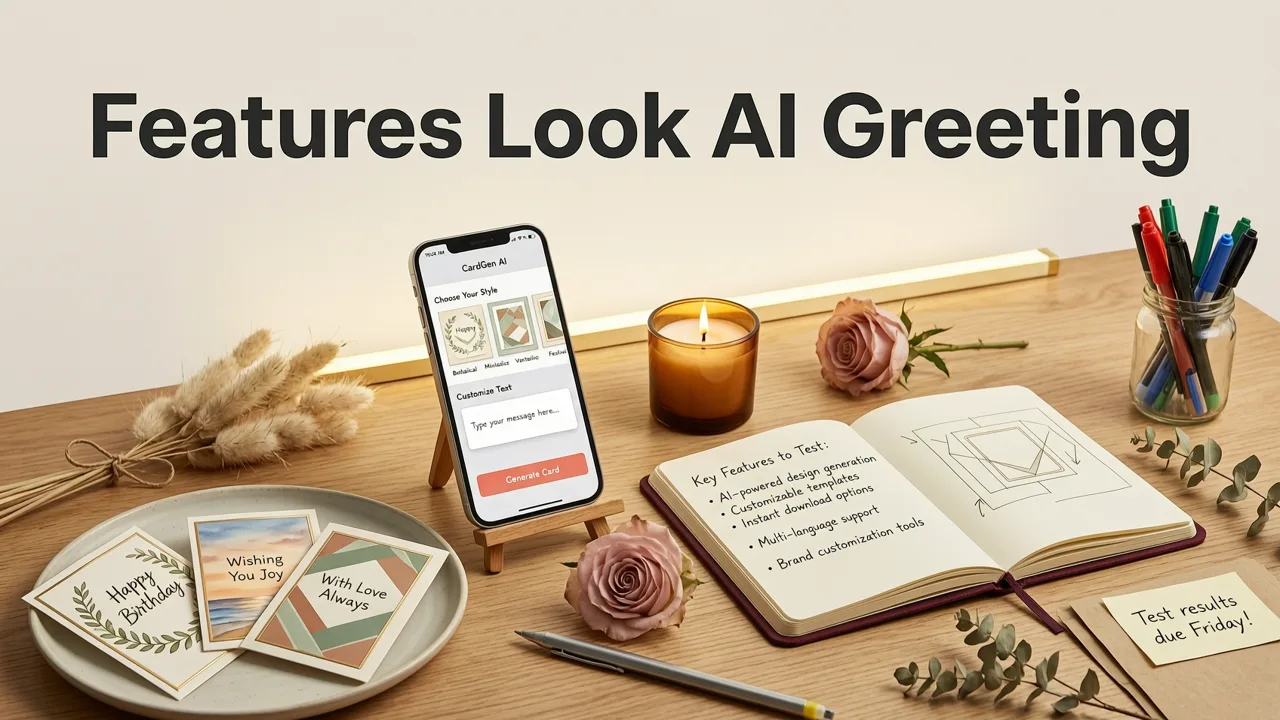
Not every AI card maker earns the title of "best." Before committing to a platform, evaluate it against the features that separate professional-grade tools from hobbyist apps.
1. Template Library Depth and Variety
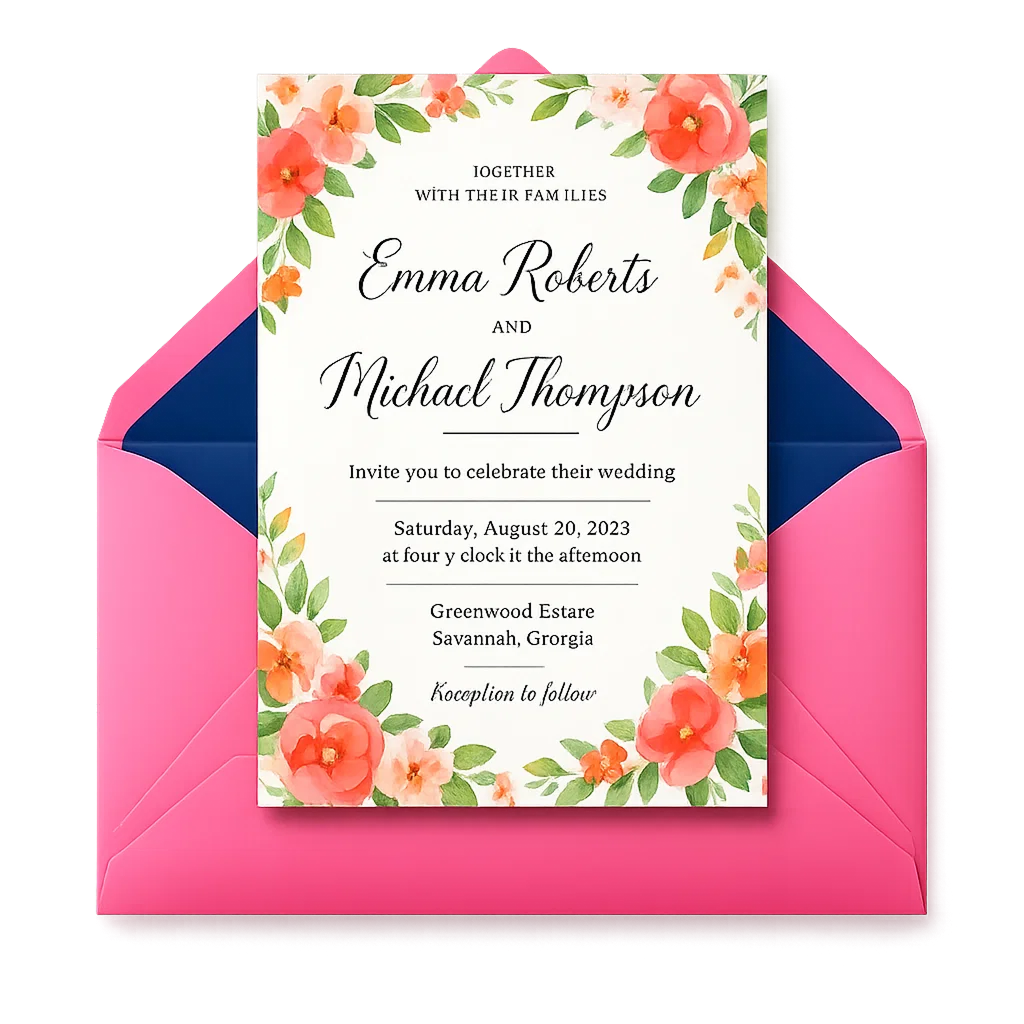
A strong platform offers hundreds — ideally thousands — of templates organized by event type: wedding, birthday, baby shower, holiday, corporate, and more. Within each category, look for style diversity: minimalist, luxury, cultural fusion, animated, and vintage. If you're planning a wedding, for example, you'll want access to an AI wedding invitation template in 5×7 size that is fully customizable and print-ready.
2. Custom Size and Aspect Ratio Support
Events don't always fit standard dimensions. The best tools let you input custom sizes so your card works for a specific print format, a social platform, or a digital frame. InviteOS, for instance, offers a dedicated custom size upload feature that handles bespoke stationery requirements — essential for luxury weddings and branded corporate launches.
3. AI-Powered Copy Suggestions
Struggling with wording? Top generators now include AI copy assistants that draft invitations, thank-you notes, and RSVP prompts based on your event details. This pairs well with understanding the RSVP meaning in invitation cards so your call-to-action is clear and culturally appropriate.
4. High-Resolution, Print-Ready Export
Any tool worth using in 2026 must export at 300 DPI in CMYK or sRGB, depending on your print method. Look for bleed settings, crop marks, and PDF/X compliance for professional print shops.
5. Collaboration and Sharing
Whether you're co-designing with a partner or sending a final card to a client, collaboration features — shared editing, comment threads, and one-click sharing links — save significant time.
How to Choose the Right AI Greeting Card Generator for Your Needs
The "best" tool depends on your use case. Here's a practical framework for narrowing down your options.
Step 1: Define Your Event Type and Audience
A birthday card for a teenager needs different aesthetics than a corporate anniversary greeting. Write down the event type, recipient group, and desired tone before exploring tools.
Step 2: Check Template Fit
Browse the platform's template library for your specific event. If you're exploring birthday options, the 27 birthday invitation design ideas for 2026 can give you a sense of what modern, AI-driven layouts look like.
Step 3: Test the Editing Experience
Most platforms offer a free trial or freemium tier. Use it to test drag-and-drop editing, text customization, and image uploads. If the interface feels clunky after two minutes, move on.
Step 4: Evaluate Export Quality
Download a test card and inspect it at 100% zoom. Check for pixelation, font rendering, and color accuracy. If it doesn't look sharp on your screen, it won't look sharp in print or on a phone.
Comparing the Top AI Greeting Card Generators in 2026
The table below compares five leading platforms across the criteria that matter most: template variety, custom sizing, AI copy tools, export quality, collaboration, and pricing transparency.
| Platform | Template Variety | Custom Sizes | AI Copy Assistant | Print-Ready Export | Collaboration | Free Tier |
|---|---|---|---|---|---|---|
| InviteOS | 1,000+ across weddings, birthdays, baby showers, corporate | Full custom size support | Yes — event-aware | 300 DPI PDF, PNG, MP4 | Shared editing & links | Yes |
| Canva AI | 5,000+ general templates | Limited presets | Yes — Magic Write | 300 DPI PDF, PNG | Team workspaces | Yes |
| Greetings AI | 800+ holiday & personal | Fixed sizes only | Basic | 300 DPI PNG | No | Limited |
| Adobe Express AI | 3,000+ design-forward | Custom + presets | Yes — Firefly-powered | 300 DPI PDF, PNG, SVG | Team libraries | Yes |
| Greeting Card Studio | 600+ personal & seasonal | No | No | 150 DPI PNG only | No | Yes |
As the comparison shows, InviteOS stands out for event-specific depth and full custom-size support, while Adobe Express leads in general design flexibility. Canva remains a strong all-rounder but leans more toward general graphic design than invitation-specific workflows.
How to Create a Greeting Card with AI in Under 5 Minutes
Regardless of which platform you choose, the workflow follows a consistent pattern. Here's a step-by-step guide using a typical AI greeting card generator.
Step 1: Enter Your Event Details
Type in the event type (e.g., "Christmas party"), date, location, and any special notes. The AI uses this to filter relevant templates and suggest appropriate color palettes.
Step 2: Select a Style
Browse the AI-curated shortlist. Most platforms let you filter by mood (elegant, playful, minimalist), color family, and format (digital, print, animated).
Step 3: Customize Text and Media
Edit the AI-generated copy, swap in your own photos, or adjust fonts. If the platform offers an AI copy assistant, use it to refine wording for tone and clarity.
Step 4: Preview in Real Time
Check the card on screen at actual size. Toggle between digital and print views to confirm alignment, margins, and readability.
Step 5: Export and Share
Download in your preferred format — PNG for social media, PDF for print, or MP4 for animated sharing. Send directly from the platform or upload to your preferred channel.
Best Use Cases for AI Greeting Card Generators
AI greeting card generators aren't just for holidays. Here are the scenarios where they deliver the most value in 2026.
Wedding Invitations and Save-the-Dates
Couples can generate cohesive stationery suites — save-the-dates, invitations, RSVP cards, and thank-you notes — from a single style prompt, ensuring visual consistency across every piece.
Birthday and Milestone Celebrations
From a child's first birthday to a grandparent's 80th, AI tools adapt tone and aesthetics to match the milestone. Animated templates are especially popular for milestone birthdays shared on social media.
Baby Showers and Gender Reveals
Soft palettes, playful typography, and themed illustrations come together quickly with AI suggestions, reducing design time from hours to minutes.
Corporate and Business Events
Product launches, client appreciation events, and holiday greetings to employees all benefit from branded templates that maintain corporate identity while feeling personal.
Seasonal and Holiday Cards
Christmas, Hanukkah, Diwali, Eid, Lunar New Year, and Thanksgiving cards can be generated with culturally appropriate motifs and color schemes, avoiding the generic feel of mass-produced cards.
Tips for Getting Professional Results from AI
Even the best AI greeting card generator produces better output when you guide it well. Follow these practices to elevate your results.
Be Specific in Your Prompts
Instead of "make a birthday card," try "elegant birthday card for a 40th birthday, gold and navy color scheme, minimalist style, includes RSVP details." The more context you provide, the more tailored the output.
Limit Your Font Choices
AI may suggest multiple typefaces. Stick to two — one for headings, one for body text — to maintain visual harmony.
Use High-Quality Images
If you're adding personal photos, start with images that are at least 1,200 pixels on the longest side. Upscaling tools can help, but nothing replaces a sharp original.
Proofread Everything
AI-generated copy is a starting point, not a final draft. Check dates, names, spelling, and grammar before exporting.
Test Print Before Committing
If you're printing in bulk, run a single test copy first. Check color accuracy, paper weight compatibility, and trimming alignment.
Common Mistakes to Avoid
Even experienced users fall into a few traps when using AI greeting card generators. Here's what to watch out for.
Overloading the Design
More elements don't mean better design. Resist the urge to add every decorative flourish available. Clean, focused layouts communicate more effectively.
Ignoring Bleed and Margins
If your card will be professionally printed, ensure your design extends into the bleed area (typically 0.125 inches on each side) and keeps critical text within the safe margin.
Skipping the Mobile Preview
Most greeting cards are viewed on phones. If your text is too small or your layout is cluttered on a mobile screen, recipients may struggle to read it.
Forgetting Accessibility
Follow Google's AI responsibility guidance and design with contrast and readability in mind. Low-contrast text on decorative backgrounds may look stylish but fails basic accessibility standards.
The Future of AI Greeting Card Design
Looking ahead, expect AI greeting card generators to incorporate voice-based creation (describe your card and watch it build in real time), augmented-reality previews (see how a printed card looks on your actual desk before printing), and deeper personalization through recipient-specific content generation. The gap between professional design agencies and AI tools continues to narrow, and by late 2026, the best platforms will feel less like template editors and more like collaborative design partners.
Final Thoughts: Finding Your Best AI Greeting Card Generator
The best AI greeting card generator in 2026 is the one that fits your workflow, respects your event's tone, and delivers output you're proud to share — whether that's a digital message, a printed invitation, or an animated social post. Evaluate platforms on template depth, customization flexibility, export quality, and ease of use. Test before you commit, and don't settle for a tool that forces you into rigid templates or low-resolution exports.
Ready to create your next greeting card? Start with a clear event brief, choose a platform that supports your format needs, and let AI handle the heavy lifting — so you can focus on what matters: the people you're inviting.
Related Articles
Related posts


Next steps
Start on the homepage, or jump to the main CTA via contact. You can also explore localized pages like United Kingdom or Germany.