2026-09-03 · 13 min read
Digital Greeting Cards for Business: 2026 Templates & Tips

Recommended next
Digital Greeting Cards for Business: The Short Answer
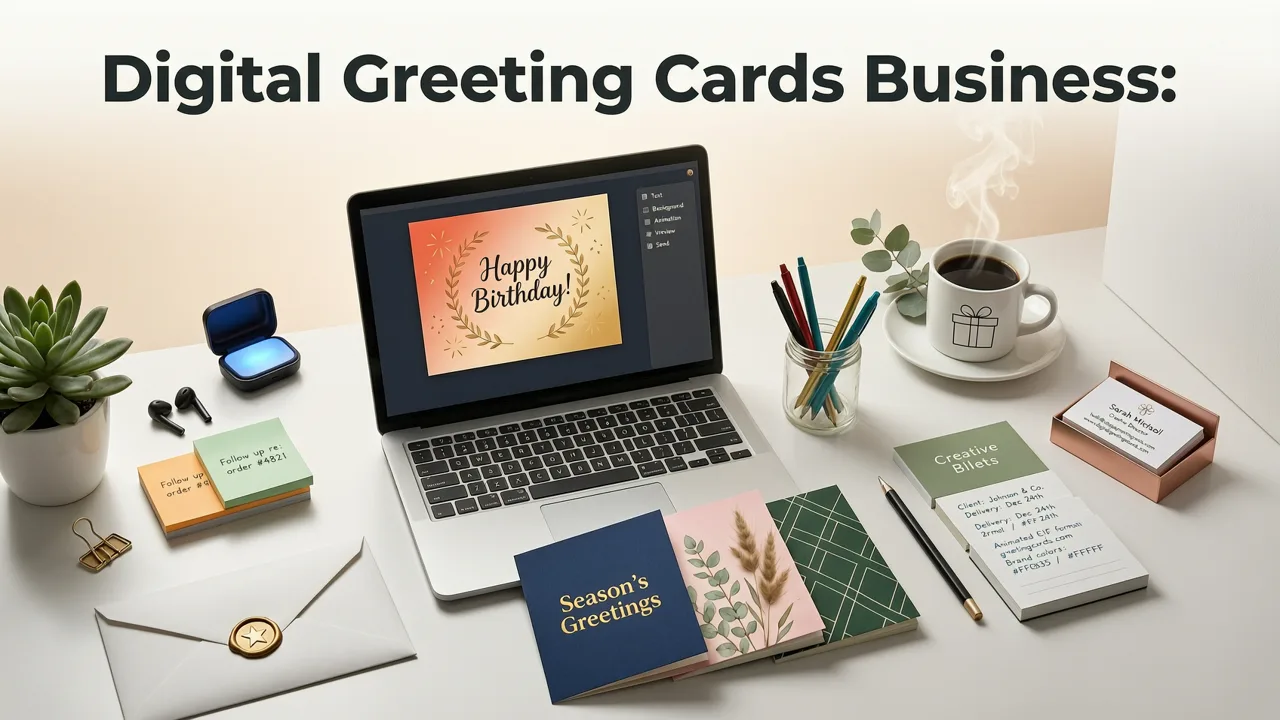
Digital greeting cards for business are professionally designed, brand-aligned electronic cards that companies send to clients, partners, and employees to mark holidays, milestones, and appreciation moments. In 2026, AI-powered tools like InviteOS's AI greeting card maker let you generate polished, on-brand cards in minutes — no graphic designer required.
If you run a small business, manage a marketing team, or oversee client relationships, digital greeting cards have become one of the most cost-effective ways to maintain touchpoints throughout the year. Below, you will find a complete breakdown of why this format matters, which templates perform best, and how to create your own cards using AI in 2026.
Why Digital Greeting Cards for Business Have Become the Standard in 2026
Corporate gifting has changed dramatically over the past few years. Physical card mailers now compete with inbox clutter, video messages, and instant messaging. Yet digital greeting cards for business continue to outperform many alternatives because they combine the warmth of a traditional card with the speed and measurability of modern marketing channels.
Cost Efficiency at Scale
Printing and mailing physical cards to a client list of even 200 recipients can cost hundreds of dollars when you factor in design, postage, and turnaround time. Digital cards eliminate nearly all of those costs. A single AI-generated template can be personalized and sent to your entire contact list in under an hour.
Brand Consistency Without a Design Team
One of the biggest challenges for small businesses is maintaining visual consistency across every customer touchpoint. AI-driven design platforms now allow you to upload your brand kit — logo, color palette, and fonts — and automatically apply those elements to every card you create. The result is a cohesive brand experience that looks like it came from a professional design agency.
Measurable Engagement
Unlike a physical card that sits on a desk, a digital greeting card can include trackable links, embedded calendars, and call-to-action buttons. In 2026, forward-thinking companies use these engagement signals to understand which clients open their messages, which offers resonate, and when to follow up with a more personalized outreach.
What Exactly Are Digital Greeting Cards for Business?
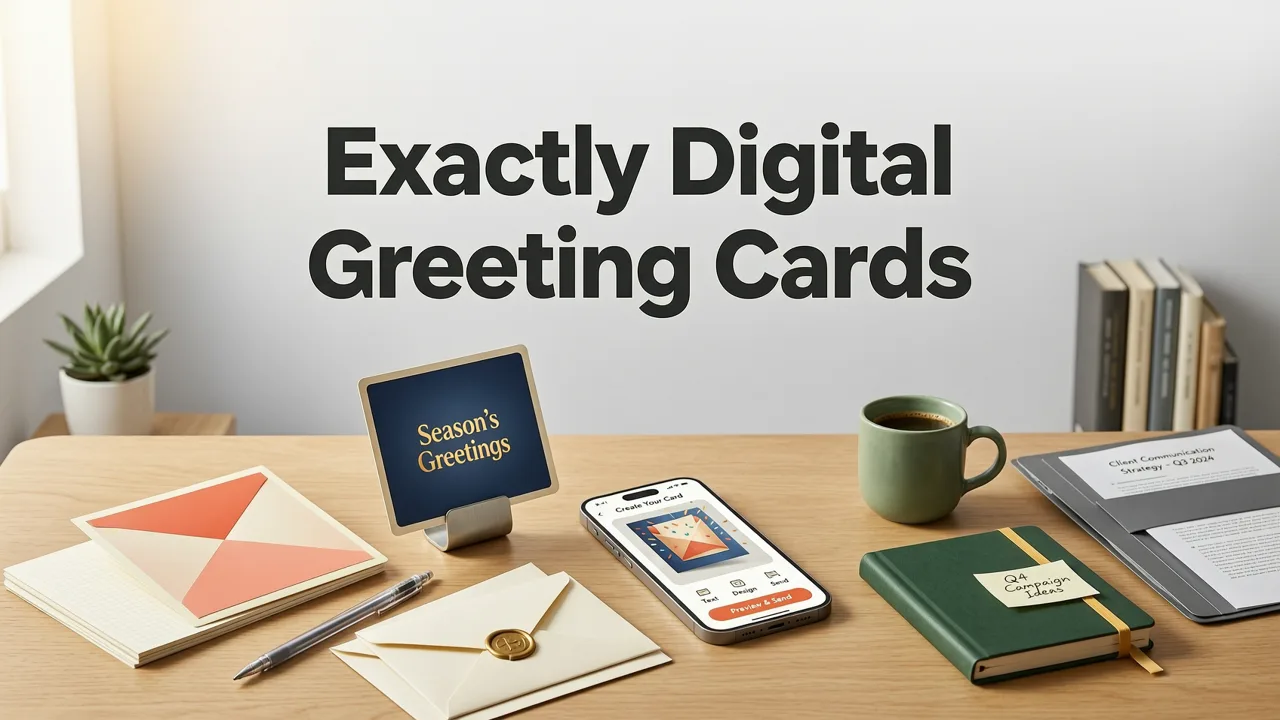
At their core, digital greeting cards for business are electronic visual messages designed to convey appreciation, celebrate milestones, or strengthen professional relationships. They differ from standard email newsletters or promotional blasts in several important ways:
- Purpose-driven design: Every element — from the color scheme to the typography — communicates thoughtfulness rather than a sales pitch.
- Personalization at scale: AI tools can insert the recipient's name, company, or even a custom message while keeping the overall design consistent.
- Multi-format delivery: Cards can be sent as email attachments, shared via messaging apps, embedded in newsletters, or posted on social media.
- Print-ready optionality: Many digital cards are also available in print-ready formats should you decide to send a physical version to key accounts.
Types of Digital Greeting Cards Businesses Use in 2026
The versatility of digital greeting cards means they serve different purposes across the customer lifecycle. Here are the most common categories companies deploy today.
Holiday and Seasonal Cards
New Year, Thanksgiving, Diwali, Lunar New Year, Christmas, and Eid are all opportunities to show clients you value the relationship. Seasonal cards sent through an AI greeting card maker can be customized for each cultural context, ensuring your message feels relevant and respectful.
Client Appreciation and Thank-You Cards
After a successful project, contract renewal, or referral, a thank-you card reinforces the partnership. These cards typically feature your brand colors, a sincere message, and optionally a small incentive such as a discount code or referral link.
Employee Milestone Cards
Work anniversaries, promotions, and onboarding milestones are perfect moments for internal greeting cards. Companies that send personalized digital cards to employees report higher engagement scores in internal surveys.
Event and Conference Follow-Up Cards
After a trade show, webinar, or networking event, a well-timed greeting card keeps your brand top of mind. Pair the card with a link to a resource, a meeting scheduler, or a special offer to convert the interaction into measurable business value.
Business Anniversary and Company Milestone Cards
Celebrating your own company's founding anniversary or a major achievement — such as reaching a revenue milestone or launching a new product — gives you a reason to reconnect with your network in a positive, non-salesy way.
How to Create Digital Greeting Cards for Business Using AI
The process of creating professional business greeting cards has been simplified enormously by AI. Here is a step-by-step walkthrough you can follow today.
Step 1: Define Your Purpose and Audience
Before opening any design tool, clarify why you are sending the card and who will receive it. A card for long-term enterprise clients will look very different from one for first-time customers or internal team members. Write down the occasion, the tone, and any specific message you want to convey.
Step 2: Choose a Template That Matches Your Brand
AI-powered platforms offer hundreds of templates categorized by occasion, industry, and style. Look for templates that align with your brand personality — whether that is minimalist and modern, warm and illustrative, or bold and corporate. If you need inspiration for broader design ideas, the guide on making digital invitations covers many of the same design principles.
Step 3: Customize With Your Brand Assets
Upload your logo, select your brand colors, and choose fonts that match your visual identity. Most AI tools in 2026 can auto-generate color palettes from a single hex code or even from an uploaded image, making it easy to stay on-brand.
Step 4: Personalize the Message
AI copywriting assistants can help you draft a message that sounds genuine rather than generic. Input the recipient's name, company, and any relevant details, and the tool will suggest language that feels personal. Always review the final copy before sending — a quick proofread prevents awkward errors.
Step 5: Preview, Export, and Share
Use the real-time preview feature to see exactly how your card will appear on mobile screens, desktop email clients, and in print. Once you are satisfied, export the card in the formats you need — typically a high-resolution PNG or PDF for email attachments, and an optimized JPEG for social media sharing.
Digital Greeting Cards for Business: Template Comparison
Choosing the right template format depends on your audience, distribution channel, and brand guidelines. The table below compares the most popular template styles used by businesses in 2026.
| Template Style | Best For | Typical Dimensions | Key Advantage |
|---|---|---|---|
| Classic Portrait Card | Holiday greetings, thank-you notes | 5×7 in (127×178 mm) | Traditional feel; works for email and print |
| Wide Landscape Banner | Email headers, social media posts | 1200×600 px | High visibility in inbox previews |
| Square Social Card | Instagram, LinkedIn, Facebook | 1080×1080 px | Optimized for social feeds |
| Animated GIF Card | Product launches, festive messages | 800×600 px | Eye-catching; higher open rates |
| Interactive HTML Card | Event follow-ups, client appreciation | Responsive | Includes clickable links and CTAs |
The 5×7 portrait format remains a safe default for most business greeting cards because it translates seamlessly between digital and physical formats. For a deeper look at why this size continues to dominate professional stationery, see the 5×7 template guide, which covers print fidelity principles that apply equally to business cards.
Best Practices for Sending Digital Greeting Cards in a Business Context
Creating the card is only half the equation. How and when you send it determines whether it strengthens the relationship or gets lost in a busy inbox.
Timing Matters More Than You Think
Send holiday cards at least one to two weeks before the holiday itself. For client appreciation cards, aim to send within 48 hours of the milestone or event you are acknowledging. Delayed cards lose their emotional impact.
Keep the Design Clean and Professional
Business greeting cards should prioritize readability and brand alignment over flashy effects. Use ample white space, limit your color palette to two or three brand colors, and ensure your logo is visible but not overpowering.
Include a Subtle Call to Action
While greeting cards should never feel like sales pitches, a gentle CTA can drive meaningful engagement. Examples include "Schedule a catch-up call," "Explore our new offerings," or simply "Visit our website." The key is to make the CTA feel like an invitation, not a demand.
Segment Your Recipient List
Not every card should go to every contact. Segment your list by relationship tier — top clients, active partners, prospects, and employees — and tailor the tone and content accordingly. A VIP client deserves a more personalized message than a general holiday blast.
Test Across Devices Before Sending
Preview your card on both mobile and desktop before hitting send. Text that looks perfectly sized on a desktop monitor may be illegible on a phone screen. Most AI tools now include responsive preview features that simulate how your card will render across different email clients.
Common Mistakes to Avoid With Business Greeting Cards
Even well-intentioned greeting card campaigns can fall flat if certain pitfalls are not avoided.
- Generic messaging: "Happy Holidays from [Company Name]" sent to 500 contacts without any personalization feels automated and impersonal. Use merge fields to insert at least the recipient's name.
- Overly promotional content: If your greeting card reads like a sales flyer, recipients will disengage. Keep the primary purpose as appreciation or celebration.
- Ignoring cultural sensitivity: When sending cards to a global audience, research cultural norms around holidays, colors, and imagery. What is festive in one culture may be inappropriate in another.
- Low-resolution exports: A pixelated logo or blurry image undermines the professionalism of your card. Always export at the highest resolution your tool allows.
- Sending too frequently: Greeting cards lose their impact if they arrive every week. Reserve them for meaningful moments — typically four to six times per year for most client relationships.
How AI Is Changing the Business Greeting Card Landscape in 2026
Artificial intelligence has transformed greeting card creation from a task that required design skills into one that requires only clear intent. According to guidance from Google's AI responsibility principles, the most effective AI tools are those that augment human creativity rather than replace it — and that is exactly what modern greeting card platforms do.
Here is how AI specifically enhances the process for businesses:
- Template generation: Describe your brand and occasion in plain language, and the AI suggests template layouts that match your criteria.
- Copywriting assistance: AI suggests message variations based on tone, length, and formality level, so you can choose the one that fits your relationship with the recipient.
- Brand consistency checks: Some tools automatically flag design elements that fall outside your brand guidelines, such as off-brand colors or incorrect logo placement.
- Batch personalization: Upload a CSV of recipient names and companies, and the AI merges each entry into the template, producing hundreds of unique cards in seconds.
These capabilities are built on the same foundation as other AI content tools documented in the OpenAI platform documentation, where large language models and image generation models work together to produce coherent, context-aware outputs.
Measuring the Impact of Your Digital Greeting Card Campaign
One advantage digital greeting cards have over physical ones is the ability to measure their effectiveness. Here are the key metrics to track:
- Open rate: If sent via email, track how many recipients opened the message containing your card.
- Click-through rate: If your card includes a CTA link, monitor how many recipients clicked through.
- Reply rate: Did recipients respond with a thank-you, a meeting request, or any other engagement?
- Client retention correlation: Over time, compare retention rates between clients who received greeting cards and those who did not.
Even simple tracking can reveal whether your greeting card strategy is delivering a return on the time invested. Most email marketing platforms integrate easily with digital card exports, making measurement straightforward.
Digital Greeting Cards vs. Other Client Touchpoints
It is worth understanding where greeting cards fit in the broader landscape of client communication.
| Touchpoint | Frequency | Emotional Impact | Cost per Recipient |
|---|---|---|---|
| Email Newsletter | Weekly or monthly | Low | Very low |
| Digital Greeting Card | 4–6 times per year | High | Low |
| Physical Gift | 1–2 times per year | Very high | High |
| Phone Call | As needed | Medium to high | Medium (time cost) |
| Social Media Interaction | Ongoing | Low to medium | Very low |
Digital greeting cards occupy a sweet spot: they carry higher emotional weight than a routine newsletter, cost far less than a physical gift, and require minimal time compared to a personal phone call. For businesses looking to maintain warm client relationships without overwhelming their calendar or budget, they are an ideal middle ground.
Getting Started With Your First Business Greeting Card Campaign
If you have never sent digital greeting cards for business purposes before, here is a simple action plan to launch your first campaign:
- Audit your contact list and segment recipients into tiers based on relationship importance.
- Choose an upcoming occasion — a holiday, a company anniversary, or a post-event follow-up — as your first card opportunity.
- Select a template from an AI-powered platform and customize it with your brand assets.
- Draft a short, sincere message for each segment. Use AI copywriting suggestions as a starting point, then personalize further.
- Preview the card on mobile and desktop, then schedule delivery for an optimal time — typically mid-morning on a Tuesday or Wednesday.
- Track opens, clicks, and replies. Note what worked and refine your approach for the next card.
Within a single quarter, you can establish a greeting card rhythm that strengthens client relationships and sets your brand apart from competitors who rely solely on transactional communication.
Frequently Asked Questions
Below are answers to the most common questions about using digital greeting cards in a business context.
Can I use the same digital greeting card for email and social media?
Yes, but you may want to adjust the dimensions. A 5×7 portrait card works well for email attachments, while a square 1080×1080 format performs better on social media feeds. Most AI tools let you export the same design in multiple sizes with a single click.
How often should a business send greeting cards to clients?
Four to six times per year is the general recommendation. This includes major holidays, client appreciation moments, and company milestones. Sending more frequently risks diluting the impact and feeling intrusive.
Do digital greeting cards look professional enough for corporate clients?
Absolutely. In 2026, AI-generated designs are indistinguishable from those created by professional graphic designers — provided you use high-resolution exports, maintain brand consistency, and keep the messaging sincere. Many Fortune 500 companies now use digital greeting cards as part of their client engagement strategies.
What is the average cost of creating digital greeting cards for a business?
Depending on the platform, costs range from free (with basic templates) to a modest monthly subscription for advanced features like batch personalization, brand kit storage, and analytics. Compared to physical card printing and postage, the savings are substantial — often 80 percent or more.
Start Creating Your Business Greeting Cards Today
Digital greeting cards for business are no longer a nice-to-have — they are a practical, measurable, and cost-effective way to nurture professional relationships in 2026. Whether you are celebrating a holiday, thanking a loyal client, or marking a company milestone, AI-powered tools make it possible to create stunning, on-brand cards in minutes.
Ready to get started? Explore InviteOS's AI greeting card maker to browse templates, upload your brand assets, and design your first business greeting card today. Your clients and partners will notice the difference.
Related posts


Next steps
Start on the homepage, or jump to the main CTA via contact. You can also explore localized pages like United Kingdom or Germany.