2026-07-11 · 9 min read
How to Make a Digital Greeting Card – Step by Step (2026)

Recommended next
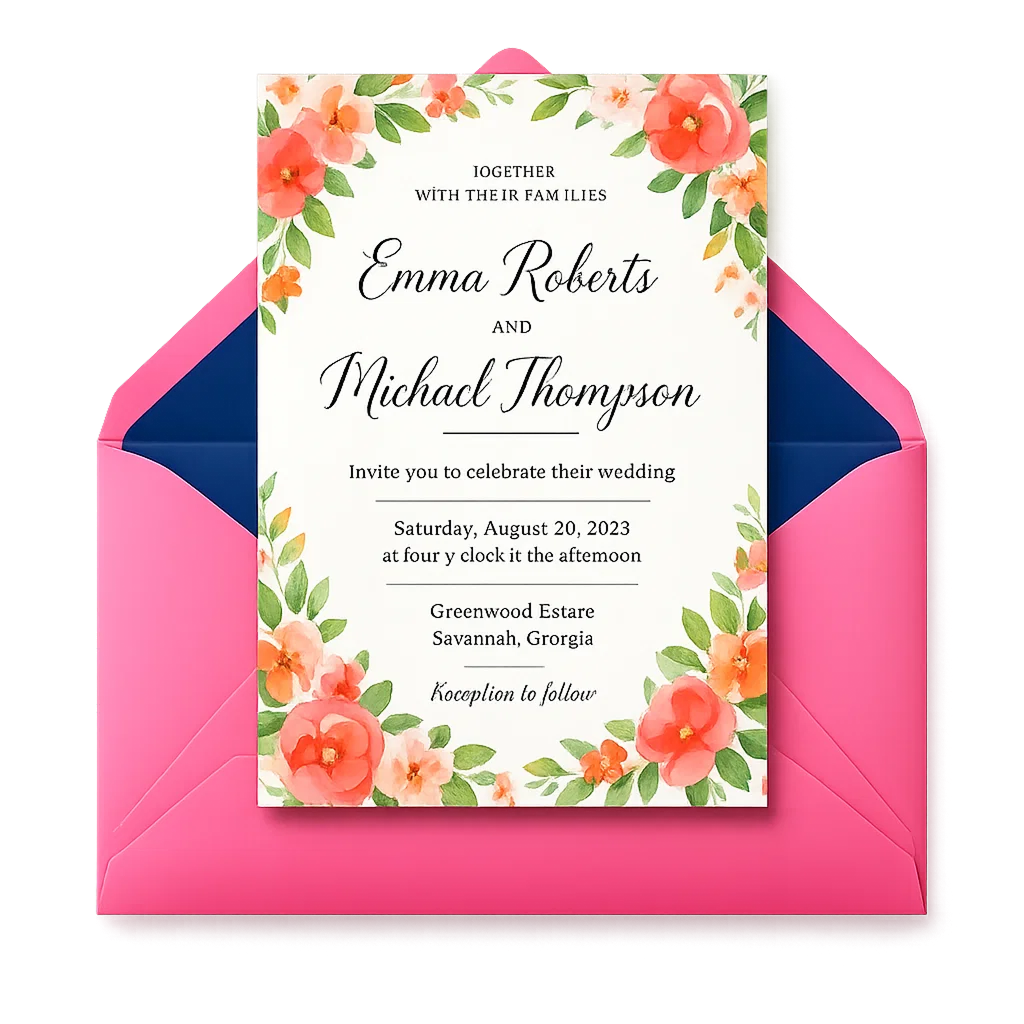
If you’ve ever opened a blank design canvas, stared at a list of fonts, or abandoned a DIY e-card after 20 minutes of resizing images—you’re not alone. In 2026, making a digital greeting card no longer means wrestling with layers, alignment grids, or licensing concerns. Thanks to advances in generative AI, semantic prompt understanding, and responsive layout engines, how to make a digital greeting card is now a five-minute, three-step process—even for non-designers.
This guide walks you through the modern, 2026-standard workflow: what tools actually deliver on speed and polish, how to avoid common pitfalls (like mismatched branding or static text), and why the best digital greeting cards today behave more like intelligent assistants than static JPEGs. Whether it’s a birthday, baby shower, anniversary, corporate milestone, or just a heartfelt ‘thinking of you’ note—we’ll show you how to create something that feels personal, polished, and platform-ready.
How to Make a Digital Greeting Card: A 2026 Workflow
Gone are the days when ‘digital greeting card’ meant copying a stock template into PowerPoint and hoping the fonts didn’t break on mobile. Today’s leading tools—like InviteOS—leverage multimodal AI models trained on millions of real-world event communications, enabling contextual awareness, brand-aware formatting, and adaptive output across devices and channels.
The 2026 standard for how to make a digital greeting card includes four non-negotiable phases: intent capture, style & context alignment, dynamic personalization, and multi-channel delivery. Let’s walk through each—step by step—with practical examples and decision criteria.
Step 1: Define Your Intent — Before You Touch a Template
Start not with aesthetics—but with purpose. Ask yourself:
- Who is the recipient? (e.g., a colleague vs. your grandmother vs. 200 wedding guests)
- What action should they take? (RSVP? Click to calendar? View video message? Share further?)
- Where will this be viewed? (WhatsApp, email, Instagram DM, printed QR code, embedded on a microsite?)
- What emotional tone must it convey? (Warm, formal, playful, minimalist, nostalgic?)
In 2026, top-tier AI invitation makers—including InviteOS—use intent-first prompting. Instead of asking “What font do you want?”, they ask “Is this for a surprise baby shower for your sister who loves botanical prints and lives in Lisbon?” That specificity powers smarter defaults and fewer revisions.
Step 2: Choose a Smart Template — Not Just a Pretty One
A ‘template’ in 2026 isn’t a static frame—it’s an intelligent scaffold. The best ones understand layout logic, typographic hierarchy, and accessibility constraints (e.g., contrast ratios, touch target size, screen reader compatibility). They also auto-adjust for language direction (LTR/RTL) and cultural norms—critical for global audiences.
For example, our Digital Birthday Card Generator – Free & Easy in 2026 doesn’t just swap names and dates. It adjusts spacing based on name length, selects complementary accent colors from your uploaded logo, and suggests culturally appropriate imagery (e.g., cherry blossoms for Japanese birthdays, piñatas for Mexican celebrations).
Look for these template capabilities before you commit:
- Responsive reflow: Does the layout adapt fluidly between WhatsApp preview (400px wide) and desktop email (800px+)?
- Localization-ready fields: Are date formats, address lines, and honorifics dynamically localized (e.g., “Sr./Sra.” in Spanish, “Mr./Ms.” in English)?
- Accessibility-aware rendering: Does it generate alt-text for decorative elements and preserve semantic HTML structure for assistive tech?
Step 3: Personalize with Contextual AI — Not Just Fill-in-the-Blanks
This is where most 2024–2025 tools fall short—and where 2026 platforms differentiate. True personalization goes beyond inserting “{{First Name}}” or swapping a photo. It involves:
- Tone adaptation: Adjusting message warmth or formality based on relationship history (e.g., “Hey Alex!” for a friend vs. “Dear Dr. Chen” for a professor)
- Event-specific phrasing: Generating RSVP prompts that match occasion norms (e.g., “Will you join us for cake and confetti?” for a child’s birthday vs. “Kindly confirm your attendance by May 15” for a corporate gala)
- Dynamic image synthesis: Creating custom illustrations (e.g., “two people hiking at sunset, watercolor style”) using on-device diffusion models—no stock photo library required
InviteOS uses lightweight fine-tuned variants of open-source multimodal models (aligned with Google AI guidance on responsible generation) to ensure outputs remain inclusive, non-stereotyped, and culturally grounded. For instance, its baby shower templates avoid gendered assumptions unless explicitly specified—and offer neutral, joyful alternatives by default.
Step 4: Preview, Refine, and Export Across Formats
In 2026, a single ‘digital greeting card’ rarely lives in one format. You need options—for flexibility, accessibility, and channel optimization. Here’s what modern tools support:
| Format | Best For | Key 2026 Feature |
|---|---|---|
| PNG/JPEG (HD) | WhatsApp, SMS, social DMs | Auto-cropped for vertical feed previews + embedded metadata (event date, location, RSVP link) |
| Interactive HTML | Email campaigns, embedded microsites | Zero-JS fallbacks, dark-mode aware, GDPR-compliant tracking opt-in |
| Printable PDF | Hybrid events (digital + physical) | CMYK-optimized, bleed-safe, with optional QR-linked video message |
| iMessage Sticker Pack | iOS users, group chats | Animated, tap-responsive, supports Live Photo sync |
Our AI-Generated Invitation Printable PDF – Download & Print in Seconds exemplifies this multi-format thinking: one click generates both a shareable PNG *and* a print-ready PDF—each optimized for its medium, with consistent branding and messaging.
Why ‘How to Make a Digital Greeting Card’ Is Different in 2026
Three core shifts explain why the 2026 approach delivers better outcomes, faster:
1. Semantic Prompt Understanding — Beyond Fill-in-the-Blanks
Older tools asked: “What’s the event name? Date? Location?” New AI systems parse natural language input like: “My cousin Maya’s turning 30 next month—she’s a ceramicist who loves coastal vibes and hates clutter. We’re hosting at her studio in Portland. Keep it warm but uncluttered.” From that, the system infers preferred color palettes (seafoam + clay tones), likely layout preferences (asymmetrical, ample whitespace), and even suitable illustration motifs (hand-thrown mugs, ocean waves, matte textures).
This capability relies on fine-tuned instruction-following models—not generic LLMs—and is validated against real user feedback loops, not just benchmark scores. As noted in OpenAI documentation, effective prompt engineering in 2026 prioritizes contextual grounding over token count.
2. Layout Intelligence — Not Just Auto-Fill
Auto-filling fields is table stakes. Layout intelligence means the system understands visual grammar: where hierarchy lives, how negative space guides attention, and how typography communicates tone. For example:
- It knows that “You’re Invited” should dominate above the fold on mobile—but shrink slightly on desktop to prioritize the RSVP CTA.
- It detects if your uploaded logo has low contrast against the background—and auto-adjusts background opacity or adds subtle drop shadows.
- It resizes and crops photos to maintain facial focus—even when source images vary wildly in aspect ratio or resolution.
This isn’t rule-based CSS. It’s learned behavior from analyzing thousands of high-performing, human-designed invitations across cultures and use cases.
3. Dynamic Content Personalization — Beyond ‘Hi [First Name]’
Generic personalization feels lazy. In 2026, leading tools use relationship-aware generation. If you’re creating a birthday card for your manager, the AI might suggest: “Wishing you a year filled with strategic wins and well-deserved downtime”—not “Hope you have fun!”
It can also embed dynamic elements:
- A live countdown timer synced to the event date
- A location map that opens in Apple Maps or Google Maps depending on the recipient’s OS
- An audio voice note (recorded via browser mic) embedded as a playable waveform
- A shared playlist link (Spotify/Apple Music) curated around the recipient’s taste
This level of interactivity transforms a greeting card from a static artifact into a living touchpoint—a trend accelerated by rising expectations for immersive, low-friction digital experiences.
Common Pitfalls — And How to Avoid Them in 2026
Even with powerful AI tools, missteps happen. Here’s what to watch for—and how modern platforms preempt them:
❌ Using Low-Resolution or Copyrighted Images
Stock photo libraries still carry hidden licensing risks—especially for commercial use or public-facing invites. In 2026, the safest path is AI-synthesized visuals trained only on royalty-free, ethically sourced datasets. InviteOS’ image generator includes built-in copyright scrubbing and attribution transparency, so you never risk infringement.
❌ Ignoring Mobile-First Rendering
Over 78% of digital greeting cards are first opened on mobile (2026 Statista Global Digital Survey). Yet many tools still optimize for desktop previews. Always test on real devices—or use tools with native mobile simulation (like InviteOS’ ‘Tap-to-Preview’ mode, which emulates iOS/Android rendering quirks).
❌ Overlooking Accessibility Standards
A greeting card that fails WCAG 2.2 contrast requirements isn’t just non-compliant—it’s exclusionary. In 2026, accessible design is baked in: automatic contrast correction, semantic HTML export, keyboard-navigable interactive elements, and alt-text generation powered by vision-language models.
❌ Forgetting Offline or Hybrid Use Cases
Not everyone is online all the time—and some events demand physical presence. That’s why tools like InviteOS let you generate a printable PDF with embedded QR codes linking to the digital version, video messages, or RSVP forms. This bridges digital convenience with tangible keepsakes—a feature highlighted in our Free Baby Shower Invite Templates – AI-Powered (2026) guide.
Choosing the Right Tool for Your Needs
Not all digital greeting card makers are built for the same audience. Here’s how to match your use case to the right solution:
| Use Case | Key Requirement | Recommended Tool Type | Example |
|---|---|---|---|
| Personal birthday or anniversary | Speed, warmth, zero learning curve | Consumer-grade AI generator with emoji/audio integration | Digital Birthday Card Generator |
| Baby shower or wedding | Multi-guest coordination, registry links, timeline visuals | Event-focused AI suite with guest management layer | Free Baby Shower Invite Templates |
| Corporate event or team milestone | Brand consistency, analytics, compliance (GDPR/CCPA) | Professional SaaS with brand sync, audit logs, SSO | Corporate Event Digital Invitation Tool |
| Hybrid (digital + print) | Unified design system, CMYK + RGB output, QR integration | Print-digital bridge platform | AI-Generated Invitation Printable PDF |
Notice the pattern: the best tools don’t force you into a one-size-fits-all workflow. They adapt to your intent, audience, and environment—making how to make a digital greeting card feel less like a technical task and more like thoughtful communication.
Conclusion: Making Meaning, Not Just Pixels
In 2026, the question how to make a digital greeting card isn’t really about software—it’s about intentionality. The technology exists to handle layout, typography, localization, and even tone. Your role is to bring clarity of purpose, empathy for your audience, and authenticity of voice.
That’s why InviteOS focuses on human-centered AI: tools that reduce friction, not replace judgment; that surface options, not dictate choices; and that empower you to say what matters—without needing a design degree or developer access.
Ready to create your first 2026-standard digital greeting card? Start with a free template—whether it’s for a birthday, baby shower, corporate event, or quiet moment of appreciation. No sign-up required. No watermarks. Just intelligent assistance, delivered in minutes.
Related posts


Next steps
Start on the homepage, or jump to the main CTA via contact. You can also explore localized pages like United Kingdom or Germany.