2026-07-07 · 9 min read
AI Wedding Invitation Maker – Create Elegant, Share-Ready Invites in

Recommended next
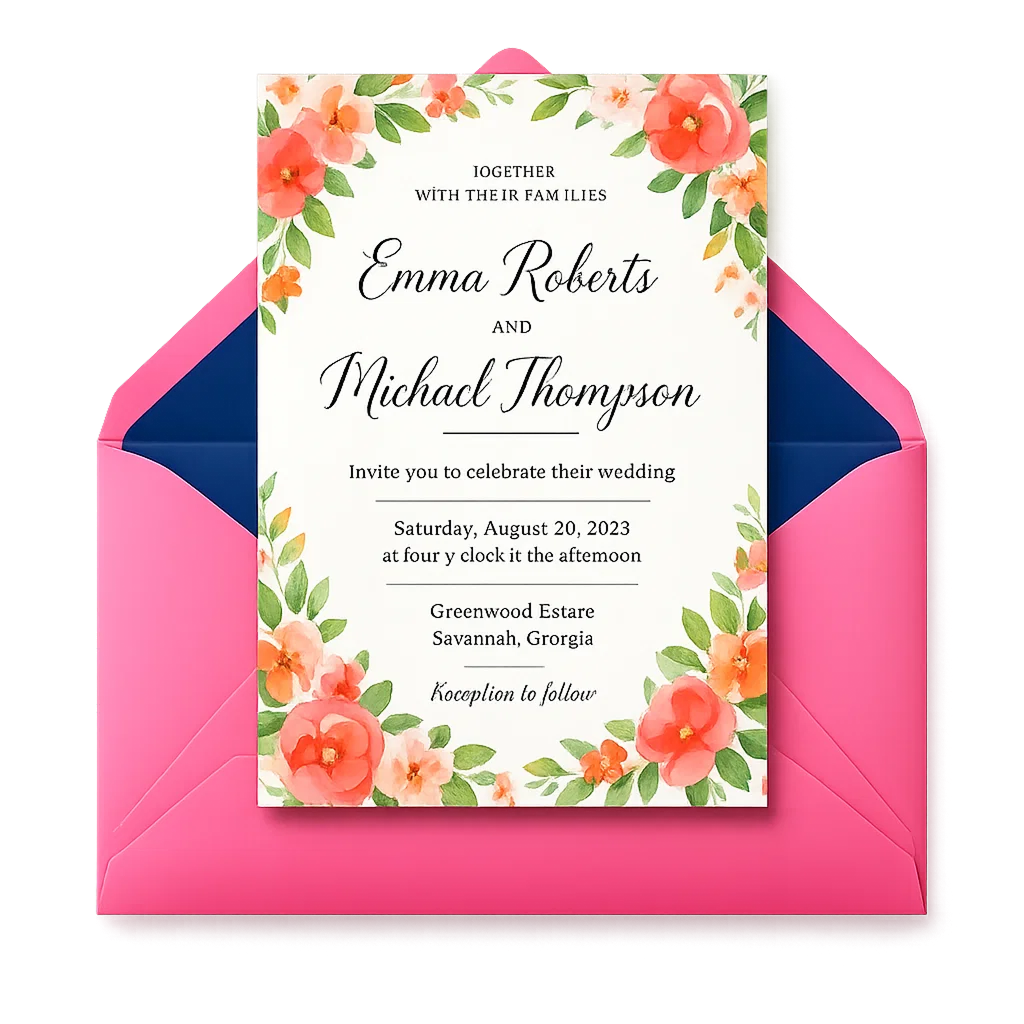
Looking for the fastest, most reliable AI wedding invitation maker in 2026? You’re in the right place. Today’s top-tier tools—like InviteOS—generate fully personalized, brand-aligned, and print-ready wedding invitations in under 90 seconds. Just enter your names, date, venue, and preferred aesthetic (elegant script, modern minimalist, rustic charm, or bold contemporary), and AI handles typography, layout balance, color harmony, and even RSVP logic—all while preserving emotional resonance and cultural nuance.
This isn’t just automation—it’s intelligent co-creation. In 2026, leading ai wedding invitation maker platforms combine generative design models with real-world printing constraints, accessibility standards (WCAG 2.2), and multilingual localization—so your invite looks flawless on a smartphone screen, a luxury matte postcard, or a bilingual PDF shared with grandparents abroad.
Why an AI Wedding Invitation Maker Is Essential in 2026
Wedding planning has evolved dramatically since 2020—and not just because of shifting guest list norms or hybrid ceremonies. In 2026, couples expect speed *and* sophistication. They want design quality that rivals boutique studios—but without $500 retainers, three-week turnaround times, or back-and-forth revisions. That’s where modern ai wedding invitation maker tools deliver measurable value:
- Time savings: Reduce invitation creation from 8–12 hours (manual Canva + PDF tweaking) to under 2 minutes.
- Cost efficiency: Eliminate per-invite printing fees, graphic designer retainers, and template licensing costs.
- Consistency across channels: Generate one source file that auto-adapts for email, WhatsApp, Instagram Stories, printed stationery, and accessible web embeds.
- Real-time personalization: Dynamically insert guest names, table assignments, dietary preferences, and even localized time zones into RSVP cards.
- Future-proof flexibility: Instantly regenerate versions for postponements, venue changes, or last-minute plus-one additions—without redesigning from scratch.
Crucially, today’s best AI wedding invitation makers don’t treat weddings as generic templates. They understand that a Jewish aufruf invitation needs different structural cues than a South Indian sangeet card—or that destination wedding invites require embedded map links, visa guidance snippets, and weather-appropriate dress code notes. This contextual awareness is powered by fine-tuned multimodal models trained on global invitation archives—not just stock photos and fonts.
How Modern AI Wedding Invitation Makers Actually Work (2026 Edition)
Gone are the days of clunky text-to-image generators spitting out surreal, unusable designs. In 2026, the most effective ai wedding invitation maker platforms operate on a layered architecture—blending generative AI, constraint-aware layout engines, and human-curated design systems.
1. Semantic Prompt Understanding — Beyond Keywords
Instead of interpreting “elegant gold foil wedding invite” as just visual style, advanced systems parse intent: Is this for a daytime garden ceremony or a black-tie ballroom reception? Does “gold foil” refer to metallic ink simulation, a shimmer effect for digital screens, or both? Using language models aligned with OpenAI’s latest reasoning frameworks and Google AI’s responsibility guidelines, these tools disambiguate phrasing, infer unstated priorities (e.g., “family-friendly” implies larger font sizes and simplified language), and flag potential cultural mismatches before generation.
2. Layout Intelligence — Not Just Auto-Fill
True layout intelligence means respecting typographic hierarchy, margin safety zones (critical for print trimming), and responsive breakpoints. For example, when generating a mobile-first RSVP card, the AI ensures the CTA button is thumb-friendly (minimum 48×48px), contrast ratios exceed WCAG 2.2 AA standards, and form fields collapse gracefully on iOS Safari. On desktop or print output, it reflows content to prioritize elegance over utility—swapping stacked buttons for side-by-side options, adjusting line spacing for readability at 12pt+, and applying subtle optical scaling to maintain visual weight across font weights.
3. Print-Ready Output Generation — Not Just Screenshots
A major pain point in earlier tools was exporting low-res PNGs or untagged PDFs unsuitable for professional printing. Today’s top-tier ai wedding invitation maker platforms generate true CMYK-embedded, bleed-inclusive, 300 DPI PDF/X-4 files—with embedded fonts, crop marks, and preflight validation. Some even integrate directly with print-on-demand partners to auto-calibrate color profiles based on paper stock (e.g., cotton rag vs. silk laminate). For DIY printers, they auto-generate step-by-step guides—including how to configure Epson SureColor or HP PageWide settings for optimal ink density and registration accuracy. Learn more about this workflow in our How to Print Digital Invitations at Home – Easy 2026 Guide.
Key Features to Look for in a 2026 AI Wedding Invitation Maker
Not all AI-powered invitation tools are built equally. Below is a comparison of must-have capabilities versus common limitations you’ll encounter in free or outdated platforms.
| Feature | Industry Standard (2026) | Limited / Outdated Tools |
|---|---|---|
| Print-Ready Export | CMYK PDF/X-4 with bleed, crop marks, embedded fonts, and preflight report | PNG/JPEG only; untagged RGB PDFs requiring manual conversion |
| Accessibility Compliance | WCAG 2.2 AA certified outputs (contrast, alt-text, semantic HTML for web embeds) | No alt-text generation; fixed font sizes; no screen-reader testing |
| Dynamic Personalization | Per-guest name insertion, table assignment, dietary tags, localized time zones | Single-name field only; no conditional logic or batch personalization |
| Multilingual Support | Bilingual layouts (e.g., English + Spanish or Hindi), right-to-left script handling (Arabic, Hebrew) | English-only; no RTL alignment or diacritic-aware typography |
| Brand Consistency | Upload logo, define primary/secondary colors, apply custom fonts (OTF/TTF) | Fixed font library only; no logo upload or hex-code color control |
When evaluating platforms, always test the full workflow—not just the preview. Try entering a non-Latin name (e.g., “Chen Wei” or “Fatima Al-Mansouri”), toggling between “Print” and “Mobile Web” export modes, and checking if the generated PDF opens cleanly in Adobe Acrobat Preflight. If it throws font substitution warnings or fails color separation checks, move on.
Top Use Cases for AI Wedding Invitation Makers in 2026
The versatility of modern ai wedding invitation maker tools extends well beyond the standard save-the-date → main invite → RSVP flow. Here’s how forward-thinking couples and planners leverage them strategically:
Destination Wedding Coordination
For weddings in Bali, Santorini, or Tuscany, AI tools now auto-generate companion cards with embedded Google Maps links, local transportation tips, recommended hotels (with affiliate booking codes), and even currency conversion widgets. Some integrate with travel APIs to pull live flight duration estimates and weather forecasts—displayed as dynamic icons next to the date.
Hybrid & Micro-Wedding Support
With 68% of 2026 weddings hosting fewer than 50 guests (per The Knot Real Weddings Study), AI tools help segment invites intelligently: VIP guests receive premium matte postcards with foil accents; remote attendees get animated web invites with Zoom link auto-population and calendar sync; local guests receive QR-coded parking instructions and valet details. All from one unified event dashboard.
Cultural & Religious Customization
Leading platforms include culturally grounded templates—such as Islamic wedding cards with Arabic calligraphy layers, Hindu invitations featuring mandala-based borders and auspicious symbols (Swastika, Om, Kalash), or Jewish invites with ketubah-inspired framing. More importantly, their AI respects religious sensitivities: avoiding imagery inconsistent with modesty guidelines, offering gender-neutral honorifics (“Mx.”, “They/Them” pronouns in RSVP), and supporting dual-language blessings with proper script directionality.
Post-Wedding Follow-Ups
Your AI wedding invitation maker shouldn’t sunset after the RSVP deadline. In 2026, top platforms let you repurpose the same design system for thank-you cards, photo-sharing galleries (with password-protected access), digital albums, and even first-anniversary reminders—maintaining visual continuity across your entire couple journey.
From Digital to Physical: Ensuring Your AI-Generated Invite Prints Perfectly
Creating a stunning digital invite is only half the battle. To ensure your ai wedding invitation maker output translates flawlessly onto paper, follow this verified 2026 workflow:
- Export in the right format: Always choose “Print-Optimized PDF” over PNG or standard PDF. Confirm it includes bleed (3mm), crop marks, and embedded fonts. For deeper technical insight, see our guide on AI-Generated Invitation Printable PDF – Download & Print in Seconds.
- Select paper thoughtfully: Matte cotton rag conveys timeless elegance but absorbs ink differently than glossy photo paper. If using home printers, opt for heavyweight (250–300 gsm) inkjet-specific cardstock with high whiteness (CIE brightness ≥ 150) to avoid dulling gold or rose-gold accents.
- Calibrate your printer: Run nozzle checks and alignment tests before bulk printing. Enable “High-Quality Photo Printing” mode and disable “Eco Mode” or “Draft Mode”—both compromise ink density and color fidelity.
- Proof before committing: Print one test copy on your final paper stock. Hold it under natural daylight—not just office lighting—to verify color warmth and contrast. Check corner registration and bleed edge consistency.
- Consider professional printing: For runs over 30 copies—or if you need foil stamping, letterpress, or die-cutting—compare local and online options. Our Invitation Card Printing Near Me – Local & Online Options Compared guide breaks down cost-per-unit, turnaround SLAs, and sustainability certifications (FSC, PEFC) for 2026’s top providers.
Common Pitfalls to Avoid With AI Wedding Invitation Makers
Even powerful tools can produce subpar results if misused. Here are five mistakes we see most often in 2026—and how to avoid them:
- Skipping the proofread step: AI generates fluent text—but doesn’t know your cousin’s name is spelled “Jordyn”, not “Jordan”. Always copy-paste your final text into Grammarly or LanguageTool for orthographic and phonetic validation.
- Ignoring aspect ratio constraints: Social media previews (Instagram, WhatsApp) truncate long vertical invites. Use the platform’s “Preview for Mobile” toggle and adjust line breaks manually if needed.
- Overloading with animations: Subtle hover effects work beautifully on desktop—but cause rendering failures on older email clients or Apple Mail. Reserve motion for web embeds only.
- Assuming all fonts render identically: A beautiful script font may display as Times New Roman on Android devices if not properly embedded or web-hosted. Stick to system-safe fallbacks or use SVG text for critical headlines.
- Forgetting legal disclosures: In the EU and UK, digital invites containing RSVP forms must comply with GDPR cookie consent and data retention policies. Reputable platforms auto-include compliant privacy footers—verify yours does.
Final Thoughts: Your Invitation Sets the Tone—Make It Intentional
Your wedding invitation is the first tangible expression of your relationship’s story. In 2026, choosing an ai wedding invitation maker isn’t about cutting corners—it’s about reclaiming time, reducing stress, and elevating intentionality. When AI handles the technical heavy lifting (typography math, color science, print calibration), you’re free to focus on what matters: crafting warm, authentic messaging; honoring family traditions; and designing an experience that reflects who you are—not just what’s trending.
The best tools don’t replace human judgment—they amplify it. So whether you’re a couple managing every detail yourselves, an event planner juggling 12 weddings this season, or a small business creating branded corporate nuptials (yes, that’s a thing in 2026), start with a platform built for real-world complexity—not just pretty pictures.
Ready to create your 2026 wedding invitation in under two minutes? Try InviteOS free today—no credit card required, no design experience needed, and every export guaranteed print-ready.
Related posts


Next steps
Start on the homepage, or jump to the main CTA via contact. You can also explore localized pages like United Kingdom or Germany.