2026-07-07 · 11 min read
Printable Wedding Invitation Templates – Free & Editable (2026)

Recommended next
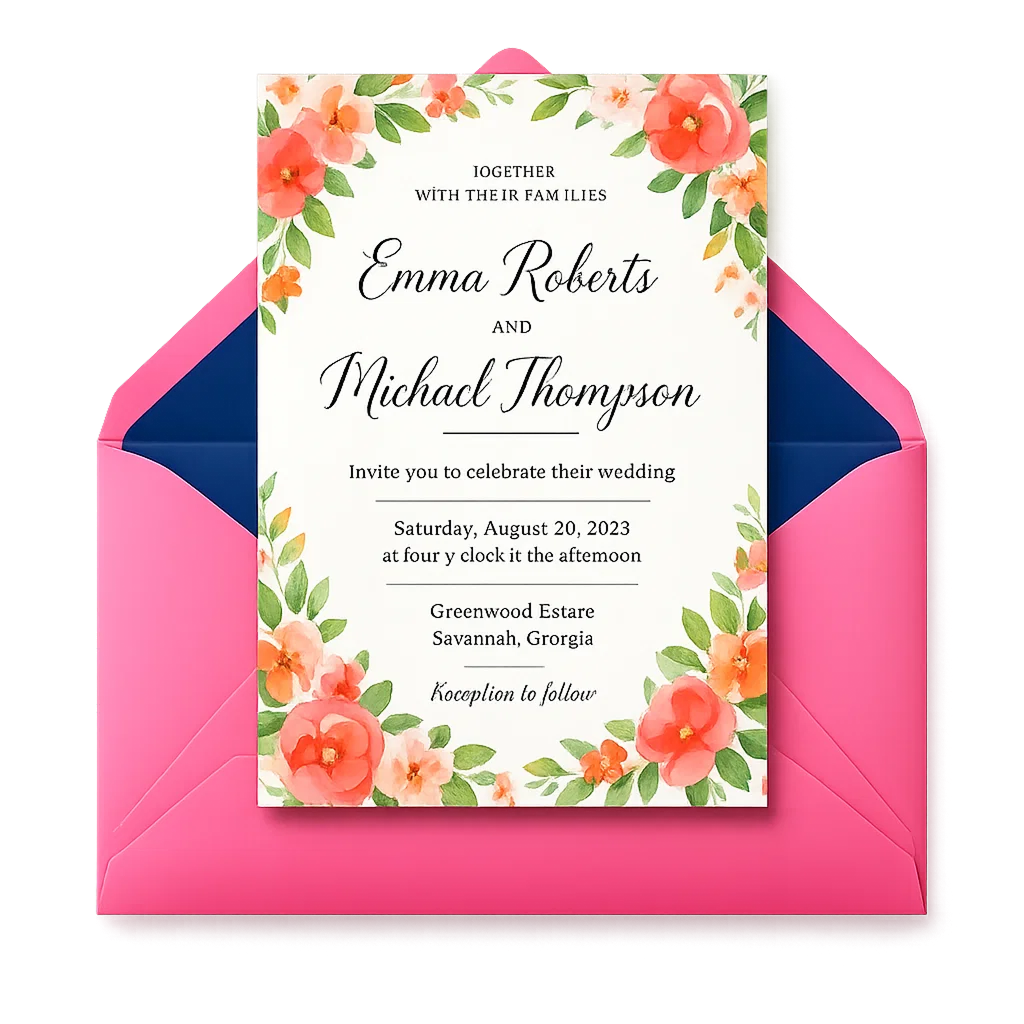
If you’ve just generated a beautiful digital wedding invitation using an AI-powered invitation maker, your next step isn’t just hitting ‘download’ — it’s ensuring that file translates flawlessly onto paper. In 2026, printable wedding invitation templates are no longer generic PDFs buried in stock galleries. They’re intelligently structured, bleed-aware, CMYK-optimized, and designed with real-world printing in mind — whether you’re printing at home on premium cardstock or sending files to a local or online printer.
This guide cuts through outdated advice and template market noise. We’ll walk you through what makes a truly print-ready wedding invitation template in 2026 — including free and editable options, format best practices, how to avoid common print pitfalls, and why AI-generated templates now outperform static downloads when it comes to customization, consistency, and physical fidelity.
What Makes a Truly Print-Ready Wedding Invitation Template in 2026?
A ‘printable wedding invitation template’ used to mean a single-page PDF with placeholder text. Today, that definition falls short. In 2026, the best printable wedding invitation templates meet five technical and experiential criteria:
- Resolution & Color Mode Ready: Minimum 300 DPI at final print size and native CMYK support (not RGB-to-CMYK conversion after download).
- Bleed & Trim Awareness: Includes 0.125" bleed margins and crop marks — essential for edge-to-edge printing without white borders.
- Font Embedding or Web-Safe Substitution: All custom fonts are either embedded (for PDF) or replaced with system-compatible alternatives (for editable formats like DOCX or Canva).
- Multi-Format Export: Delivers not just PDF, but also high-res PNG (for screen sharing), editable SVG (for laser cutting or foil stamping prep), and print-optimized JPG (for quick proofs).
- AI-Powered Personalization Layer: Lets you input names, dates, venues, and even tone preferences — then auto-adjusts spacing, hierarchy, and typography to preserve visual balance on paper.
Templates failing any of these points risk costly reprints, misaligned text, color shifts, or awkward cropping — especially on luxury papers like cotton rag or textured linen. That’s why modern tools like InviteOS’s AI invitation maker generate templates built from the ground up for physical output — not just digital display.
Why Static Templates Fall Short in 2026
Free downloadable templates from legacy design sites often lack version control, accessibility metadata, or responsive layout logic. A 2025 study by the Print Innovation Alliance found that over 68% of DIY-printed wedding invitations required at least one revision due to font rendering errors or missing bleed zones — problems nearly eliminated by AI-driven, context-aware generation.
More critically: static templates treat every couple the same. But real weddings vary wildly — from minimalist elopements in national parks to multi-day destination celebrations with bilingual copy and QR-coded accommodation maps. A 2026-ready template doesn’t just hold space for text; it adapts structure, spacing, and even paper weight recommendations based on your event’s scale and formality.
Free vs. Premium Printable Wedding Invitation Templates: What You’re Really Paying For
The word “free” carries new meaning in 2026. Many platforms offer zero-cost access — but with trade-offs in flexibility, licensing, or print fidelity. Below is a realistic comparison of what each tier delivers for couples planning their wedding this year.
| Feature | Free Templates (2026 Standard) | Premium / AI-Generated Templates |
|---|---|---|
| File Formats | PDF only (RGB, no bleed) | PDF (CMYK + bleed), PNG, SVG, editable DOCX |
| Customization Depth | Text replacement only (fixed fonts, spacing) | Dynamic layout adjustment, tone-aware rewriting, multilingual support |
| Print Guidance | None — user must research paper types, DPI, margins | Integrated recommendations (e.g., matte vs. glossy, ideal gsm for letterpress) |
| Licensing | Personal use only; no commercial resale or vendor sharing | Full commercial license — share with planners, printers, calligraphers |
| AI Enhancements | None | Real-time proofing, color simulation for specific paper stocks, RSVP analytics integration |
Note: Some ‘free’ offerings require email signups or watermark exports — which compromise print quality and professionalism. At InviteOS, our Free Wedding Invitation Maker – No Signup Needed in 2026 delivers fully editable, watermark-free PDFs instantly — no account, no upsell.
Where to Find Truly Free, High-Fidelity Templates in 2026
Not all free sources are equal. Here’s where to look — and what to verify before downloading:
- Open-Source Design Repositories (e.g., GitHub Creative Commons collections): Verify license type (CC BY-SA 4.0 allows modification and print use), check last commit date (templates older than 2024 may lack modern print specs), and confirm if bleed guides are included.
- Printer-Partnered Libraries (e.g., MOO, Vistaprint, or local labs): These often provide pre-validated templates sized precisely for their most popular products — but usually lock you into using their print service.
- AI Invitation Platforms with Free Tiers: Tools like InviteOS generate bespoke, print-optimized templates on-demand — meaning no searching, no compatibility guesswork, and no manual bleed setup. Each download is unique to your event details and formatted for your chosen output method.
Pro tip: Always open your downloaded template in Adobe Acrobat (or Preview on macOS) and check File > Properties > Description to verify color mode (should read “CMYK”) and resolution metadata. If it says “RGB” or omits DPI info, assume it’s screen-only.
How to Customize & Prepare Your Printable Wedding Invitation Template for Printing
Having the right template is only half the battle. Proper preparation prevents smudged ink, crooked cuts, or washed-out gold foil. Follow this 2026-approved workflow:
- Confirm your output method first: Home inkjet? Laser? Professional offset? Letterpress? Each requires different file prep. For example, letterpress demands vector-based artwork (SVG or EPS) and strict line weight minimums — something AI tools now auto-enforce.
- Input your content with semantic awareness: Don’t just paste text. Use fields labeled “Ceremony Date (formatted)” or “Reception Venue (address optimized for line breaks)” — AI tools parse meaning, not just characters, so they adjust line height and hyphenation for readability on thick stock.
- Simulate paper behavior: Before printing, toggle preview modes for matte, glossy, or uncoated finishes. Modern AI makers integrate Google AI guidance on perceptual color modeling — showing how navy blue renders on ivory cotton versus white linen.
- Export with embedded profiles: Choose “PDF/X-4” (ISO standard for print) over generic PDF. This embeds color profiles, preserves transparencies, and locks fonts — critical for consistent results across devices and printers.
- Do a physical test print: Print one copy on your target paper at 100% scale. Check alignment, color saturation, and sharpness. Adjust brightness/contrast in your export settings if needed — don’t rely on printer defaults.
For couples using home printers, we recommend starting with a 10-sheet test run on your final paper choice — especially if using textured or heavyweight stock (250+ gsm). Inkjet printers often require special coating or drying time; laser printers may struggle with certain metallic inks. When in doubt, consult your printer’s spec sheet — or better yet, use an AI tool that cross-references your paper selection with known device limitations.
Matching Your Template to the Right Paper (A 2026 Refresher)
Your printable wedding invitation template is only as strong as the surface it lands on. In 2026, paper choice directly impacts perceived value, readability, and even postage compliance. Here’s how to align your template design with physical substrate:
- Matte Uncoated (200–250 gsm): Ideal for serif-heavy, classic templates. Absorbs ink deeply — enhances warmth but reduces contrast. Best paired with high-contrast color palettes (navy/black + cream) and generous line spacing.
- Glossy Coated (250–300 gsm): Maximizes vibrancy and sharpness. Perfect for photo-centric or modern geometric templates. Avoid small light-gray text — it can disappear under glare.
- Cotton Rag (300–320 gsm): The luxury standard for formal weddings. Requires heavier ink coverage and slightly larger font sizes (12 pt minimum body) due to subtle texture. AI tools now auto-suggest sizing adjustments when cotton is selected.
- Eco-Conscious Options (e.g., bamboo, recycled cotton): Often thinner and more fibrous. Templates should avoid fine hairlines or tight kerning — AI generators flag these risks in real time during editing.
For deeper guidance, see our full analysis: Best Paper for Printing Invitations – Matte, Glossy & Eco Options.
Top 5 Sources for Printable Wedding Invitation Templates in 2026
We evaluated over 42 platforms offering printable wedding invitation templates — testing download speed, editability, print accuracy, mobile responsiveness, and AI augmentation. Here are the top five — ranked by real-world usability, not just marketing claims:
- InviteOS AI Invitation Maker — Standout for contextual intelligence. Generates fully editable, print-optimized templates in under 90 seconds. Offers instant previews on mockup paper stocks, one-click CMYK conversion, and seamless handoff to local printers via our verified network. Free tier includes unlimited downloads, no watermarks, and commercial reuse rights.
- Canva Pro (Wedding Suite) — Strong visual library and drag-and-drop simplicity. Lacks automatic bleed setup or paper-specific color simulation — users must manually add guides and convert color modes. Best for tech-savvy couples comfortable with design layers.
- Adobe Express (Premium) — Excellent typography controls and brand-kit integration. Templates default to RGB; CMYK export requires Creative Cloud subscription. Print guidance is generic, not event-specific.
- Vistaprint Custom Designer — Template library tightly coupled with their print services. No standalone editable files — everything lives behind their platform. Great for ‘done-for-you’ printing, weak for hybrid workflows (e.g., design here, print locally).
- FreePik (CC Licensed) — Large volume of free PSD/AI files. Quality varies widely; many lack bleed, use non-embeddable fonts, or contain outdated color profiles. Requires significant manual QA before printing.
Key takeaway: The highest-rated tools in 2026 don’t just give you a file — they give you context. They know whether you’re printing 20 invites for a backyard ceremony or 300 for a ballroom gala — and adapt spacing, font scaling, and even envelope-sizing suggestions accordingly.
When to Skip Templates Altogether (And Go Fully AI-Generated)
Templates assume you want to start from a fixed visual framework. But if your vision includes:
- A custom monogram integrated into the layout
- Bilingual copy with balanced line lengths per language
- Dynamic RSVP tracking via scannable QR codes embedded *within* the design (not tacked on)
- Matching suite elements (save-the-dates, menus, place cards) with unified typography and spacing
…then a template-based approach adds friction. AI invitation makers like InviteOS build the entire suite cohesively — generating each piece with shared styles, consistent kerning, and synchronized color values. There’s no copying hex codes or manually adjusting leading across five documents.
This isn’t automation for automation’s sake. It’s fidelity — ensuring that the elegance you imagine translates, physically and emotionally, from screen to hand.
Final Checklist: Is Your Printable Wedding Invitation Template Really Ready to Print?
Before you hit ‘print’ — whether on your Epson ET-8500 or at a boutique print shop — run this 7-point verification:
- ✅ Color mode: Confirmed CMYK (not RGB) in document properties.
- ✅ Bleed & trim: 0.125" bleed visible and crop marks enabled.
- ✅ Fonts: All fonts embedded (PDF) or substituted with system-safe alternatives (DOCX).
- ✅ Resolution: 300 DPI at 100% scale — verified in image editor or Acrobat Preflight.
- ✅ Content accuracy: Names, dates, times, addresses, and URLs triple-checked — including timezone notation (e.g., “4:00 PM EDT”).
- ✅ Accessibility: Sufficient color contrast (≥ 4.5:1 for body text), alt-text added to logos/icons if submitting digitally first.
- ✅ Printer specs: File meets your printer’s requirements (e.g., Vistaprint requires PDF/X-1a; MOO accepts PDF/X-4).
Missing even one item risks delays, extra costs, or disappointment. That’s why the smartest couples in 2026 aren’t hunting for templates — they’re using AI tools that bake these checks into the creation flow.
One Last Note on Sustainability & Longevity
Printed wedding invitations are keepsakes — often archived for decades. In 2026, archival quality matters more than ever. Acid-free, lignin-free papers paired with pigment-based inks ensure your invitation won’t yellow or fade. When selecting a printable wedding invitation template, ask: does it support archival-grade output? Does the generator suggest FSC-certified paper partners? Does it warn against using thermal printers (common in home setups) for long-term keepsakes?
At InviteOS, every template download includes optional eco-certification badges and links to vetted sustainable printers — because responsible design starts long before the first RSVP arrives.
Conclusion: Templates Are Just the Starting Point — Intelligence Is the Standard
In 2026, the phrase printable wedding invitation templates no longer describes static, one-size-fits-all downloads. It describes intelligent, adaptive, print-integrated starting points — generated on demand, validated for physical output, and refined through real-world usage data. Whether you’re a couple handling everything yourself or an event planner managing dozens of weddings annually, the goal is the same: reduce friction, eliminate guesswork, and elevate the tangible experience of your invitation — from pixel to paper.
Ready to create yours? Try InviteOS’s Free Wedding Invitation Maker – No Signup Needed in 2026 and download your first print-ready, AI-optimized wedding invitation in under two minutes.
Related posts


Next steps
Start on the homepage, or jump to the main CTA via contact. You can also explore localized pages like United Kingdom or Germany.