2026-07-16 · 8 min read
Greeting Card Scholarship 2026: Apply Now

Recommended next
There is no nationally recognized, widely publicized 'Greeting Card Scholarship 2026' administered by a major foundation, industry association, or government body as of July 2026. Despite recurring online searches for this phrase—especially among design students, educators, and early-career creatives—the term appears to be a persistent misnomer or conflation of several real opportunities. This article clarifies the landscape: what does exist in 2026, why the confusion persists, and how aspiring designers can strategically pursue funding aligned with greeting card design, digital invitation creation, and visual communication careers.
Greeting Card Scholarship 2026: What’s Real (and What Isn’t)
The phrase 'greeting card scholarship' frequently surfaces in student forums, scholarship aggregator sites, and social media posts—but rarely links to a single, authoritative program bearing that exact name in 2026. Instead, searchers are likely encountering one or more of these overlapping realities:
- Legacy references to defunct programs (e.g., the now-discontinued Recycled Paper Greetings Scholarship, which ended in 2019);
- Generic scholarship listings mislabeled by third-party aggregators using keyword-stuffed titles;
- Design school merit awards or departmental grants tied to illustration, typography, or print/digital media portfolios—some of which accept greeting card or invitation projects as supporting work;
- AI-augmented creative competitions launched in 2025–2026 by tech-forward platforms (including emerging initiatives from digital invitation ecosystems).
In short: while no centralized 'Greeting Card Scholarship 2026' exists, multiple credible pathways do support students whose creative practice intersects with greeting cards, digital invitations, and expressive visual communication—especially those leveraging AI tools ethically and effectively.
Why the Confusion Persists in 2026
Three converging trends explain the enduring appeal—and ambiguity—of this search term:
- Rise of AI-powered design tools: Platforms like Inviteos have democratized high-quality card and invitation creation, prompting students to explore how AI fluency strengthens portfolio development and career readiness. Many assume formal scholarships must follow suit.
- Growth in experiential and personalized communication: As physical and digital greetings evolve—from eco-friendly digital invitations to animated, interactive e-cards—the academic and professional value of this niche has increased, fueling demand for targeted funding.
- Algorithmic search behavior: Students searching for 'how to get a scholarship for greeting card design' often truncate queries to 'greeting card scholarship 2026', reinforcing the phrase in autocomplete and SEO—even when no matching program exists.
This isn’t misinformation—it’s an indicator of unmet need. And in 2026, that need is being met through adjacent, high-value alternatives.
Real Scholarship & Funding Opportunities for Greeting Card Designers in 2026
Below are verified, active funding sources open to undergraduate and graduate students in 2026 whose work relates to greeting cards, invitation design, visual storytelling, or human-centered digital communication.
1. The AIGA Worldstudio Scholarships (Open Through October 2026)
Administered by AIGA—the professional association for design—the Worldstudio Scholarships support students from underrepresented backgrounds pursuing careers in design, including graphic design, illustration, and interactive media. While not branded as 'greeting card' funding, applicants regularly submit invitation suites, holiday card series, and culturally responsive greeting concepts as part of their portfolio narratives. In 2026, submissions emphasizing inclusive language, accessible color systems, and ethical AI augmentation receive special consideration—aligning closely with modern greeting card best practices.
2. Adobe Creative Residency Grants (Applications Open August 2026)
The Adobe Creative Residency is a paid, year-long fellowship—not a traditional scholarship—but functions as high-impact career funding for emerging creatives. In 2026, Adobe explicitly invites proposals focused on 'reimagining personal expression in digital formats,' including interactive greeting experiences, generative card design systems, and cross-platform invitation ecosystems. Past residents have built open-source card templates and AI-assisted localization tools for multilingual greeting workflows—work directly relevant to platforms like Top Digital Invitation Trends in 2026.
3. The Sustainable Design Innovation Fund (Deadline: 15 November 2026)
Launched in 2025 by the Green Graphic Arts Coalition, this $5,000 grant supports student-led projects that reduce environmental impact in visual communication. Submissions accepted include digital-first greeting systems that replace paper waste, accessibility-optimized e-card frameworks, and carbon-aware design toolkits. Given the growing importance of eco-friendly digital invitations, this fund represents one of the most thematically precise options available for greeting-related work in 2026.
4. University-Specific Awards (Ongoing)
Many accredited design programs—including RISD, SCAD, and Parsons—offer merit-based scholarships where greeting card or invitation design may serve as portfolio evidence. For example:
- SCAD’s Interactive Design Excellence Award accepts submissions of animated digital cards with embedded RSVP logic;
- Parsons’ Communication Design Fellowship encourages proposals exploring cultural ritual, celebration, and digital intimacy—core themes in contemporary greeting design.
Always verify deadlines and portfolio requirements directly with your institution’s financial aid or departmental office.
How AI Tools Like Inviteos Strengthen Scholarship Applications in 2026
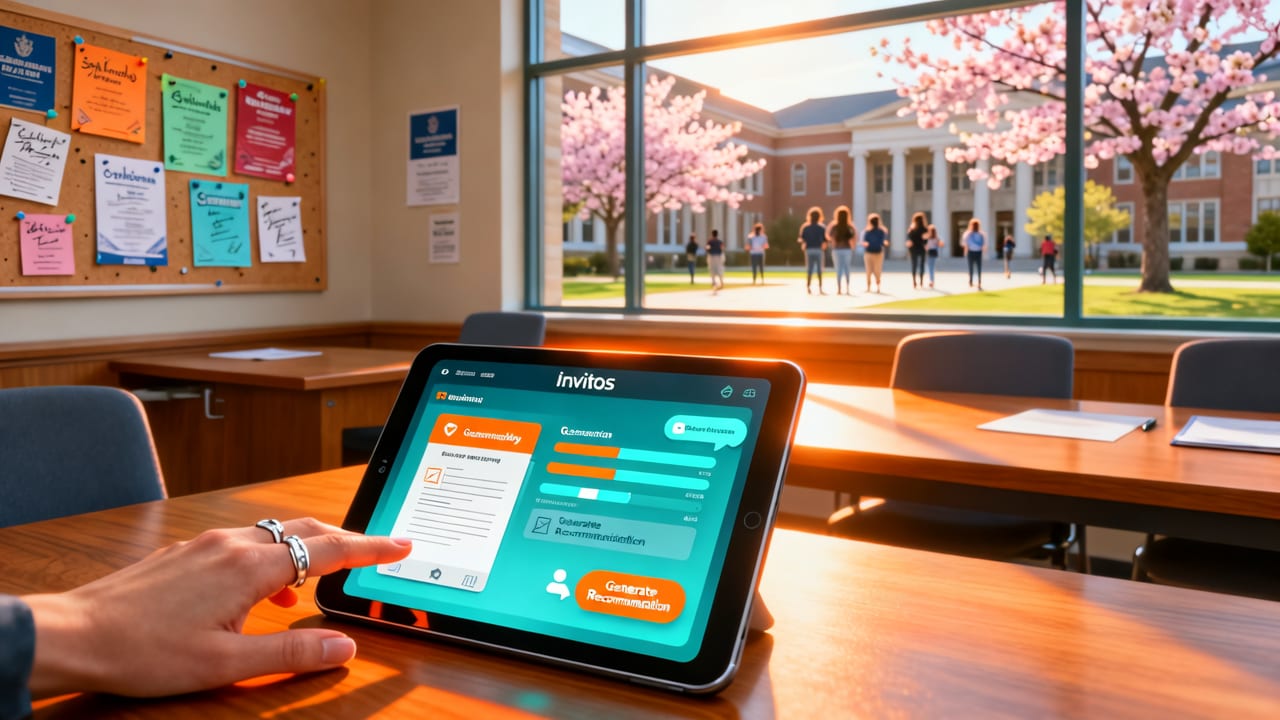
In 2026, scholarship reviewers increasingly assess not just final outputs—but process fluency. Demonstrating thoughtful, ethical use of AI design tools signals technical awareness, iterative thinking, and adaptability—qualities highly valued across creative industries.
Here’s how students are using Inviteos and similar platforms to elevate applications:
- Portfolio efficiency: Rapidly prototype 10+ greeting card variations (e.g., wedding, Eid, Pride, corporate anniversary) to showcase stylistic range and audience sensitivity;
- Accessibility validation: Use built-in contrast checkers and alt-text prompts to ensure inclusivity—then document the workflow in application essays;
- Localization testing: Generate bilingual birthday invitations (e.g., English/Spanish or English/Mandarin) to demonstrate cross-cultural communication competence;
- Eco-impact transparency: Pair digital invitation projects with metrics (e.g., 'This suite replaces ~120 printed cards, saving ~8.5 kg CO₂')—a compelling addition to sustainability-focused applications like the Sustainable Design Innovation Fund.
Crucially, top-tier applications don’t treat AI as a shortcut—they position it as a collaborative layer. As emphasized in Google AI guidance, responsible AI use involves human oversight, intentionality, and clear attribution. Successful applicants describe how they edited, refined, and ethically contextualized AI-generated assets—not just that they used them.
A 2026 Application Checklist for Greeting-Adjacent Work
If your project involves greeting cards, invitations, or celebratory digital design, use this checklist before submitting:
- ✅ Define your 'why': Articulate the cultural, emotional, or functional problem your greeting system solves (e.g., 'Bridging intergenerational gaps in digital RSVP adoption').
- ✅ Show process, not just polish: Include wireframes, iteration notes, and AI prompt logs—not just final JPEGs.
- ✅ Highlight ethics & inclusion: Note font choices for dyslexia, color contrast ratios, multilingual support, or sustainable hosting decisions.
- ✅ Link to live examples: Host your digital invitation on a simple subdomain (e.g.,
greetings.yourname.dev) and embed a working demo—many reviewers now expect interactivity. - ✅ Cite tools transparently: Name Inviteos (or other platforms) and explain why it was appropriate for this specific goal—e.g., 'Used Inviteos’ brand-safe template engine to maintain consistency across 5 event types while preserving custom illustration assets.'
Emerging Opportunities: What’s New in 2026
While no 'Greeting Card Scholarship 2026' exists, two noteworthy developments signal growing institutional recognition of this domain:
1. The 2026 Digital Celebration Design Challenge (DCDC)
Launched in March 2026 by the International Council of Design (ICoD), the DCDC is a global, open-call competition—not a scholarship—but offers $10,000 in prizes and mentorship from leaders at Canva, Mailchimp, and Hallmark Labs. It explicitly welcomes entries in four categories: Digital Invitations, Animated Greetings, Inclusive Holiday Systems, and Sustainable Celebration UX. Winners gain publication in Communication Arts and feature placement on ICoD’s 2026 Design Futures Report. Submissions close 30 September 2026.
2. Inviteos Student Creator Program (Rolling Applications)
Inviteos does not offer a scholarship—but its Student Creator Program provides free Pro-tier access, portfolio promotion, and direct feedback from the platform’s design team. While not monetary, this support accelerates skill development and visibility—key assets when applying to external scholarships or residencies. Participants consistently cite the program as instrumental in refining their digital invitation portfolios for AIGA and Adobe applications.
Strategic Alternatives If You’re Seeking Direct Financial Support
If your immediate need is tuition assistance or living expense support—not just project funding—consider these high-relevance options:
| Scholarship/Program | Eligibility Focus | 2026 Deadline | Max Award | Notes |
|---|---|---|---|---|
| AIGA Worldstudio | Underrepresented students in design | 15 October 2026 | $5,000 | Strong preference for community-engaged work; greeting cards used as cultural artifacts qualify |
| Adobe Creative Residency | Emerging creatives with a defined project | 15 August 2026 | $75,000 + equipment | Requires detailed proposal; ideal for AI-augmented greeting systems |
| Sustainable Design Innovation Fund | Students reducing environmental impact in visual comms | 15 November 2026 | $5,000 | Explicitly accepts digital invitation and e-card projects |
| Graphic Artists Guild Educational Fund | U.S.-based students in illustration/graphic design | 1 December 2026 | $2,500 | Accepts greeting card series as portfolio evidence |
| Women in Communication Design Grant | Women/nonbinary students in communication design | 30 September 2026 | $3,000 | Encourages submissions around inclusive celebration design |
Pro tip: Many of these programs allow you to reuse core application materials (essays, recommendation letters, portfolio links). Start drafting in July 2026—you’ll save weeks when deadlines converge in fall.
Final Thoughts: Reframing the Search
Searching for a 'greeting card scholarship 2026' isn’t futile—it’s a signal that your creative interests sit at a vital intersection: human connection, visual craft, technological fluency, and cultural responsiveness. In 2026, those qualities are more valuable—and better funded—than ever before. The key is shifting from a narrow keyword to a broader, more strategic identity: you’re not applying for a greeting card scholarship. You’re applying as a digital celebration designer, an inclusive communication strategist, or an AI-augmented visual storyteller.
Platforms like Inviteos aren’t just production tools—they’re rehearsal spaces for the future of expressive design. Whether you’re prototyping a bilingual baby shower invite, optimizing contrast for low-vision users, or building a zero-waste digital RSVP flow, you’re already doing the work that scholarships seek to support.
Ready to build your strongest application? Explore Top Digital Invitation Trends in 2026 for inspiration—or browse Professional Business Event Invitation Templates for 2026 to see how industry standards are evolving. Your next opportunity isn’t hidden behind a mislabeled search—it’s waiting for the right framing, the right portfolio, and the right moment to launch.
Related posts


Next steps
Start on the homepage, or jump to the main CTA via contact. You can also explore localized pages like United Kingdom or Germany.