

Haldi, mehndi and sangeet invitations
Last updated
A South Asian wedding is often a week of events, and many families send a separate card for each one. This page covers three that come before the wedding day: what each event is, what its invitation should say, and how to make the cards in Inviteos and send them on WhatsApp.
Key points
- The haldi is a daytime turmeric ceremony, mostly for close family, and guests usually wear yellow.
- The mehndi is the henna night; its invitation should say which family is hosting, because each side often holds its own.
- The sangeet is an evening of music and dance; tell guests on the card if they are expected to perform.
- There is no fixed order for the three events, so each card should give its own date, time and venue.
- Send separate cards when the guest lists differ; one card can list every event when everyone is invited to all of them.
On this page
- What is the difference between haldi, mehndi and sangeet?
- What should a haldi invitation say?
- What should a mehndi invitation say?
- What should a sangeet invitation say?
- Should haldi, mehndi and sangeet have separate cards?
- How do I make a haldi or mehndi card on my phone?
- How should I send the cards on WhatsApp?
- Questions about haldi, mehndi and sangeet
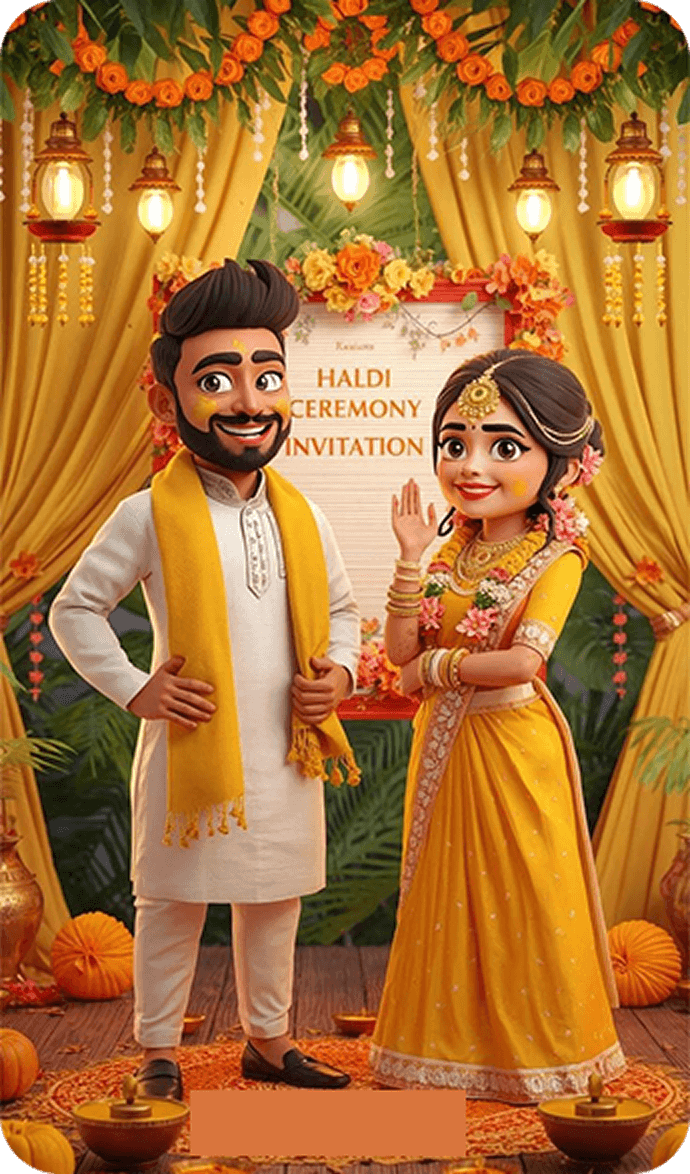
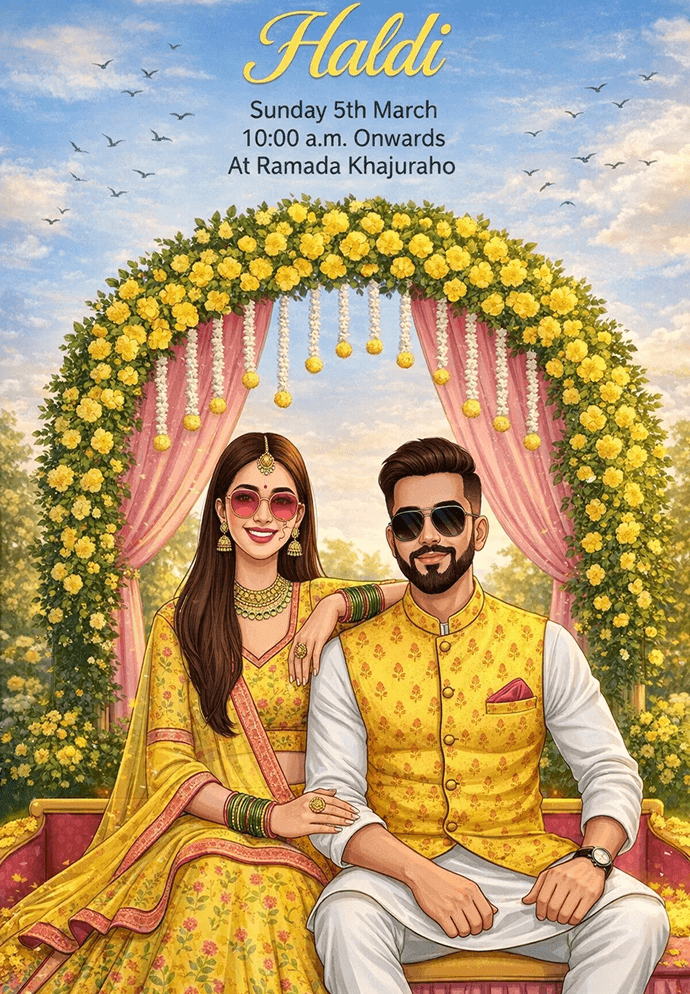
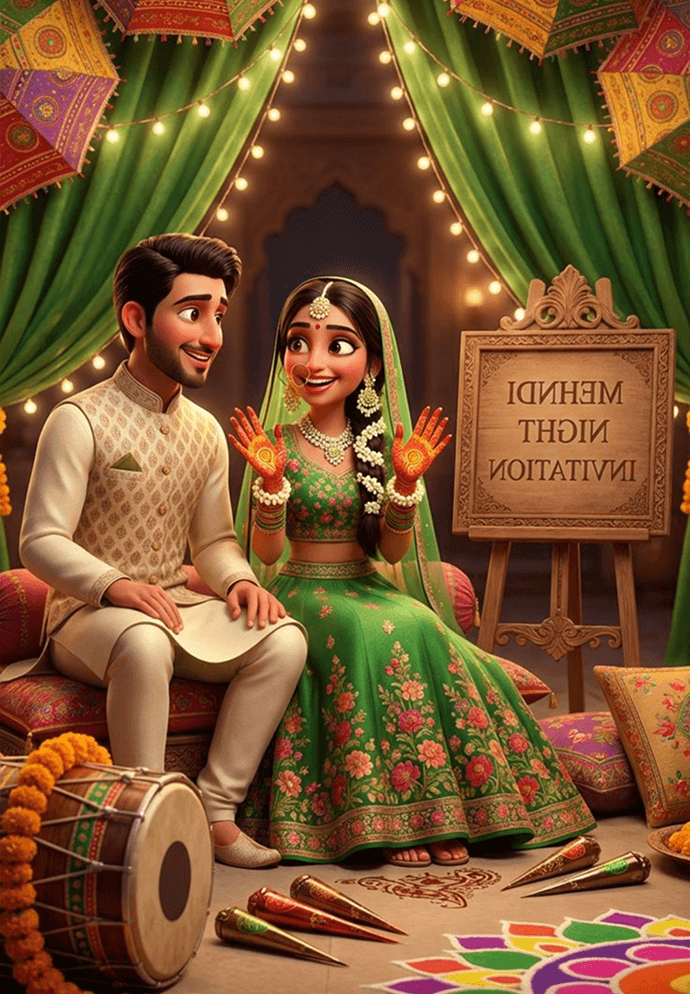
What is the difference between haldi, mehndi and sangeet?
All three take place in the days before the wedding. The haldi is a daytime turmeric ceremony, usually for close family. The mehndi is the henna night, when the bride's hands and feet are decorated. The sangeet is an evening of music and dance where both families come together.
| Event | What happens | When | Guests |
|---|---|---|---|
| Haldi | Close family rub turmeric paste on the bride or groom | Daytime, usually a day or two before the wedding, often at home | Mostly close family, often asked to wear yellow |
| Mehndi | Henna on the bride's hands and feet, with music, dancing and food | An evening before the wedding | Family and friends; each side often hosts its own |
| Sangeet | Music and dance, often with performances by friends and relatives | An evening before the wedding | Both families together, usually the biggest of the three |
What should a haldi invitation say?
Whose haldi it is, the date and time, the venue and, if the hosts want one, the colour to wear. Most haldis are held in the daytime, often at the family home, so the card can be relaxed and short. One or two lines of message is enough. For example:
Please join us for Ayesha's haldi on Saturday 14 December at 11 a.m., at home in DHA Phase 5. Do wear yellow.
What should a mehndi invitation say?
Say which family is hosting, because the bride's and the groom's sides often hold separate mehndis. Then give the date, start time and venue, any dress code, and who guests should reply to and by when. If there's dinner or a dholki after, mention it so guests know what the evening involves. For example:
The family of Sara invite you to her mehndi on Thursday 12 December at 7 p.m. Dinner and dholki to follow. Kindly reply by 5 December.
What should a sangeet invitation say?
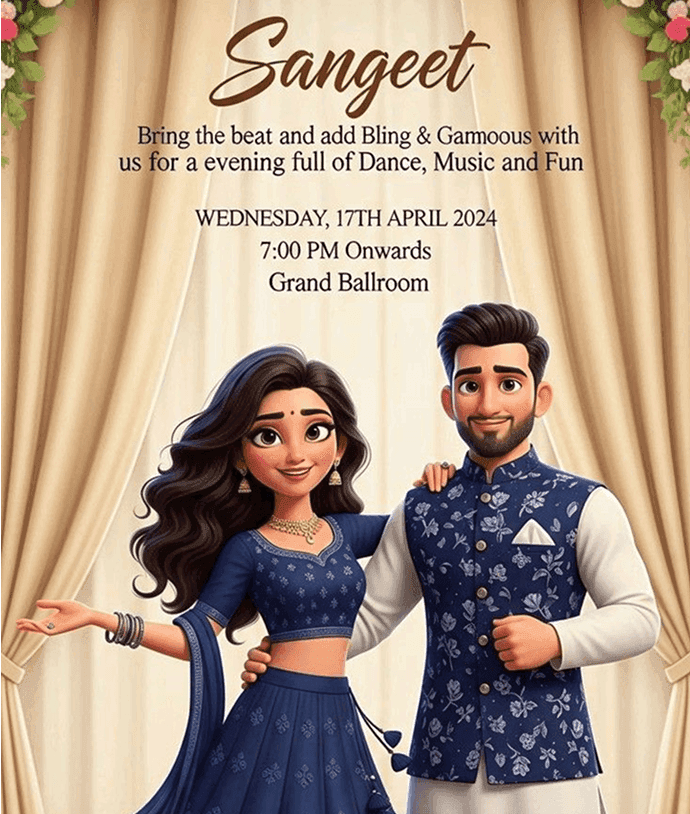
Who is hosting, the date, start time and venue, and a dress code or theme if there is one. A sangeet card can be the most playful of the week. If you want guests to dance or perform, say so on the card, so they have time to prepare.
The sangeet design above opens with a line along these lines:
Bring the beat and add bling and glamour, and join us for an evening full of dance, music and fun.
Should haldi, mehndi and sangeet have separate cards?
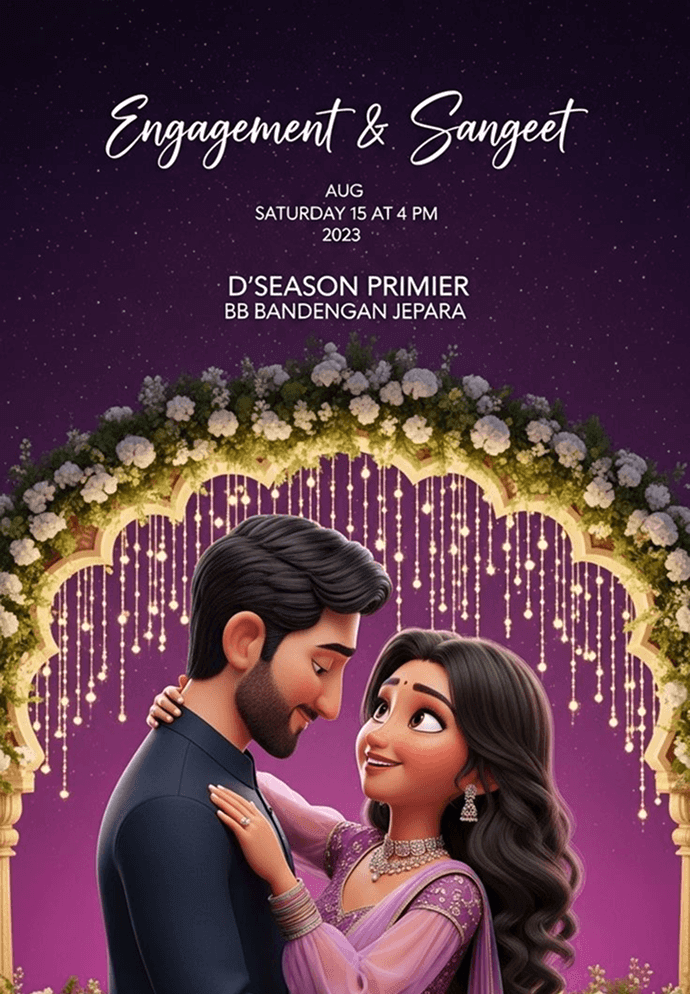
Separate cards work best when each event has a different guest list, which is common: the haldi is often family only, while the sangeet is bigger. If everyone is invited to everything, one card can list the events with their dates, like the engagement and sangeet design above.
How do I make a haldi or mehndi card on my phone?
In Inviteos, on your iPhone or iPad:
- Choose the occasion.
- Add the details: whose event, date, time, venue and a short message.
- Pick a style and colour palette that suit the event.
- Choose a size for WhatsApp, or for print.
- Preview the card and download it.
Inviteos is free to download from the App Store for iPhone and iPad. A subscription costs $2.99 a week or $14.99 a year (see pricing).
How should I send the cards on WhatsApp?
Send each card as a portrait image, so it shows in full without being cropped; 1080×1350 pixels works well in a chat. Send it to each family yourself rather than only to a group, early enough for guests from other cities to plan, and add a short reminder a day or two before.
The other sizes are in our guide to invitation sizes for WhatsApp.
Questions about haldi, mehndi and sangeet
What order do the haldi, mehndi and sangeet go in?
There’s no fixed order. It depends on the family, the region and how many days the wedding runs, and some families hold the mehndi and sangeet on the same night. That’s why each card should give its own date and time.
What should guests wear to a haldi?
Yellow, unless the hosts ask for something else. It’s the traditional colour, after the turmeric. Wear something you don’t mind getting stained, because the paste often ends up on guests too.
What is a dholki?
A dholki is an informal evening of singing to the dholak, a two-headed hand drum, usually held at home in the days or weeks before a wedding. It’s common at Pakistani and Punjabi weddings, and it can follow the mehndi, as in the example above.
How do you invite guests to a combined mehndi and sangeet?
Make one card that names both events, such as “Mehndi and Sangeet”, with one date, time and venue. Say roughly what happens when, for example henna in the early evening and dancing after dinner, so guests know when to arrive.
Sources for the timings, sizes and traditions on this page: David's Bridal, Wikipedia: Punjabi wedding traditions.
Make your haldi, mehndi and sangeet cards in Inviteos
Inviteos is free to download for iPhone and iPad. Some features need a subscription: $2.99 a week or $14.99 a year, billed by Apple, and you can cancel any time in your iPhone's Settings.