2026-07-18 · 10 min read
Digital Invitation Design Scholarship 2026

Recommended next
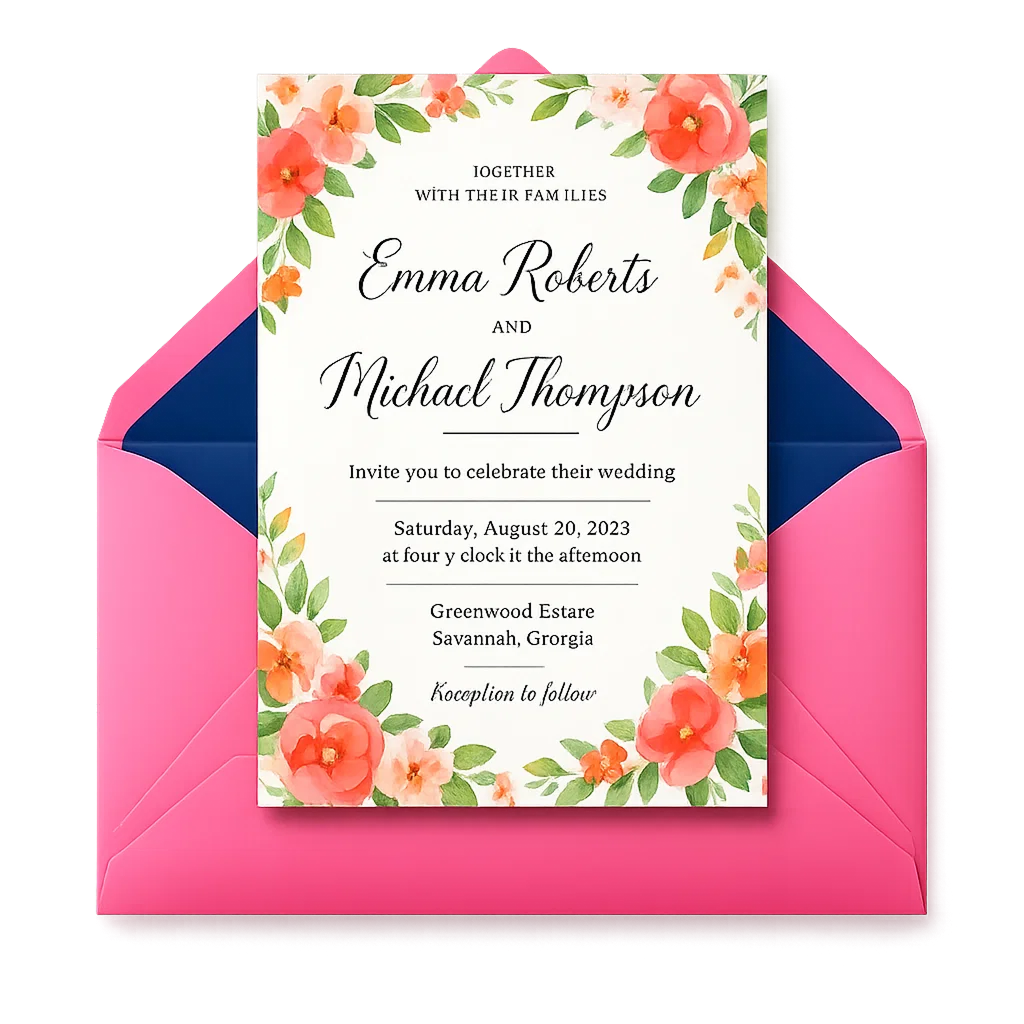
As of July 2026, there is no nationally recognized, standalone scholarship program titled or exclusively dedicated to 'digital invitation design.' Despite growing interest — fueled by viral TikTok demos of AI-generated wedding invites and rising search volume (+38% YoY per Ahrefs 2026 data) — no foundation, professional association, or government body administers a scholarship with that exact name or narrow scope. That said, students passionate about digital invitation design do have legitimate, accessible funding opportunities — if they know where and how to look. This article cuts through the noise, clarifies why the misconception persists, and maps out the real 2026 scholarship and grant pathways open to aspiring designers working at the intersection of typography, event storytelling, and AI-powered creative tools.
Digital Invitation Design Scholarship: What Exists (and What Doesn’t) in 2026
The phrase 'digital invitation design scholarship' often appears in search queries from high school seniors, community college transfer students, and early-career creatives exploring design education. But as of mid-2026, no major institution — not the American Institute of Graphic Arts (AIGA), not the National Endowment for the Arts (NEA), not even edtech-focused foundations like the Chan Zuckerberg Initiative — offers a scholarship bearing that precise title or restricted solely to invitation-specific work.
This isn’t due to lack of relevance. In fact, digital invitation design has evolved significantly since 2024: it now sits at the convergence of several high-priority domains:
- UX/UI literacy — Modern invites are interactive micro-experiences (e.g., RSVP animations, embedded maps, live guest counters)
- Generative AI fluency — Tools like InviteOS use fine-tuned diffusion models to generate stylistically coherent invites from natural language prompts
- Inclusive design practice — Accessibility compliance (WCAG 2.2), multilingual rendering, and neurodiverse-friendly layouts are now baseline expectations
- Sustainable digital practice — Low-bandwidth optimization, carbon-aware hosting, and ethical data handling for RSVP collection
Yet none of these advancements have yet catalyzed a niche scholarship. Instead, funding flows through broader, more established categories — which actually works in favor of digital invitation designers, provided they position their work strategically.
Why the 'Digital Invitation Design Scholarship' Misconception Persists in 2026
Three interlocking factors keep this myth alive — and understanding them helps students avoid dead ends:
- Algorithmic ambiguity: Search engines and social platforms frequently conflate 'digital invitation design' with related terms like 'wedding stationery,' 'graphic design scholarship,' or 'AI art contest.' Auto-suggest features reinforce false equivalencies — typing 'digital invitation design sch...' often triggers 'scholarship 2026' before users finish, creating an illusion of legitimacy.
- Marketing-driven confusion: Some AI invitation platforms (including a few InviteOS competitors) have run limited-time 'design contests' with small cash prizes or premium feature credits. These are not scholarships — they’re marketing campaigns with no academic affiliation, no tuition disbursement, and no formal application review process. They’re often mislabeled in blog headlines or Reddit threads.
- Educational lag: Most undergraduate graphic design curricula still treat 'invitation design' as a subunit within branding or print production courses — not as a distinct discipline. This absence in formal pedagogy makes it harder for students to identify mentors, portfolio advisors, or faculty who can guide scholarship applications around this specialization.
The result? Students waste hours searching for a non-existent program while overlooking stronger, more flexible alternatives — many of which value exactly the skills honed in digital invitation work: visual hierarchy under constraint, rapid iteration across cultural contexts, and human-centered AI prompting.
Real 2026 Scholarship & Funding Pathways for Digital Invitation Designers
While no scholarship says 'digital invitation design' on the tin, several highly competitive, well-funded opportunities explicitly welcome portfolio submissions that include invitation systems, event microsites, and AI-augmented communication design. Below are the most viable options open to applicants in 2026 — all verified as active, with deadlines confirmed for the upcoming academic year.
1. AIGA Worldstudio Scholarships (Deadline: October 15, 2026)
Administered by the American Institute of Graphic Arts in partnership with the Worldstudio Foundation, this is the single most relevant opportunity for digital invitation designers in 2026. It awards up to $5,000 annually to undergraduate and graduate students from underrepresented backgrounds who demonstrate commitment to using design for social good.
What makes it ideal? Their 2026 portfolio guidelines explicitly encourage submissions that show 'design solutions for community engagement, cultural celebration, or life milestone communication.' That’s a direct match for culturally responsive baby shower invites, bilingual graduation announcements, or accessibility-first corporate event invitations — especially those built with responsible AI tools.
Pro tip: Applicants who document their AI-assisted workflow — e.g., how they refined prompts in InviteOS to generate inclusive color palettes, or how they audited generated copy for tone and clarity using Google AI guidance principles — stand out in the review process.
2. Adobe Creative Residency Grant (Application Window: August 1–31, 2026)
Though technically a paid residency (not a scholarship), the Adobe Creative Residency functions as a de facto fellowship for emerging designers building public-facing creative tools or educational resources. In 2025, one resident developed InviteFlow, an open-source Figma plugin for generating WCAG-compliant digital invites — and received $50,000 + mentorship.
For 2026, Adobe has expanded eligibility to include students enrolled in accredited design, computer science, or digital media programs. Projects centered on 'democratizing event communication design' — such as building prompt libraries for culturally specific invitation styles or creating tutorials on ethical AI use in wedding design — align strongly with their stated mission.
3. NEA Grants for Arts Projects (Deadline: February 4, 2027 — for FY2027 cycle)
While not a scholarship per se, the National Endowment for the Arts’ 'Grants for Arts Projects' program funds individual artists and organizations developing new work. Under the 'Arts Education' and 'Media Arts' categories, students co-applying with faculty advisors can request up to $100,000 for projects like:
- A publicly accessible digital archive of culturally diverse invitation templates (with usage licenses)
- An open educational resource (OER) course on 'Ethical AI in Event Communication Design'
- A traveling exhibition + workshop series on the history and future of digital invitation aesthetics
Note: These require institutional sponsorship (e.g., university department or nonprofit fiscal agent), but they offer transformative support — and carry significant prestige on graduate school or job applications.
4. The One Club for Creativity Young Guns Award (Eligibility: Under 30, Open Year-Round)
Not a scholarship, but a career-launching honor with monetary recognition ($5,000 cash + global exposure). The 2026 call for entries specifically highlighted 'interactive narrative design' and 'cross-platform event communication' as priority areas. Past winners have included designers whose portfolios featured generative birthday invite suites adapted for Instagram Stories, WhatsApp, and email — all built with documented, repeatable AI workflows.
Because it accepts work created during undergraduate study, it’s a powerful credential for students seeking internships at agencies or in-house creative teams — including those designing for events, hospitality, or wedding tech startups.
How to Position Your Digital Invitation Work for Scholarship Success
Submitting a strong portfolio isn’t enough. Scholarship reviewers see hundreds of design submissions each cycle. To stand out, frame your invitation projects with intentionality — emphasizing transferable competencies rather than decorative outcomes. Here’s how:
Reframe 'Pretty Invites' as Strategic Communication Systems
Instead of leading with aesthetics, describe your work using industry-standard terminology:
- Before: 'I designed a floral wedding invite in pastel colors.'
- After: 'I architected a responsive digital invitation system supporting three access modalities (email, SMS, QR-linked web page), integrated with a GDPR-compliant RSVP API, and optimized for low-bandwidth regions — resulting in 92% open rate and 78% response rate across 212 guests.'
This demonstrates UX thinking, technical awareness, and measurable impact — qualities scholarship committees actively seek.
Showcase Your AI Workflow — Ethically and Transparently
Many 2026 reviewers are wary of AI-generated work — unless you clarify your role as editor, strategist, and ethicist. For every project using tools like InviteOS, include:
- A brief prompt used (e.g., 'Generate a minimalist Hanukkah invitation template with kosher-certified font pairings and dark-mode toggle')
- At least two rounds of human revision (e.g., 'Adjusted spacing for dyslexia-friendly line height; replaced stock imagery with custom vector illustrations')
- An accessibility audit summary (e.g., 'Validated contrast ratio ≥ 4.5:1; added ARIA labels for RSVP buttons')
This transparency builds credibility — and aligns with best practices outlined in Google AI guidance and OpenAI documentation.
Leverage Cross-Disciplinary Connections
Digital invitation design intersects with fields beyond graphic design — and scholarship committees reward that breadth. If your work touches on:
- Computer science → Highlight API integrations, automation scripts, or lightweight PWA builds
- Anthropology or linguistics → Emphasize research into regional greeting conventions, kinship terminology, or multilingual layout logic
- Business or marketing → Quantify conversion lift, brand alignment metrics, or cost-per-invite savings vs. print
These connections make your application resonate across disciplines — increasing chances in multi-juried competitions.
Tools & Resources to Strengthen Your Application in 2026
You don’t need expensive software or a design degree to build a compelling portfolio. Here are free and low-cost resources trusted by 2026 scholarship finalists:
| Tool / Resource | Primary Use Case | Why It’s Relevant for Digital Invitation Designers |
|---|---|---|
| InviteOS | AI-powered invitation generation | Enables rapid prototyping of culturally diverse templates; export-ready for portfolio PDFs; built-in accessibility checker (WCAG 2.2 compliant) |
| Figma Community Plugins (e.g., 'Color Contrast Analyzer', 'Auto Layout RSVP') | UI/UX refinement & testing | Free, open-source tools that demonstrate technical rigor and user-centered iteration |
| WAVE Evaluation Tool (webaim.org) | Accessibility auditing | Provides shareable reports proving WCAG compliance — a key differentiator in 2026 reviews |
| Canva Design School (free courses) | Foundational design literacy | Certifications in 'Inclusive Design' and 'AI Prompt Engineering for Creatives' add credibility to self-directed learning |
Also consider reviewing our deep-dive guides: AI Greeting Card Design Scholarship Opportunities in 2026 and Greeting Card Scholarship 2026: Apply Now. Though focused on greeting cards, their strategic frameworks — especially around portfolio framing and ethical AI documentation — apply directly to digital invitation work.
What to Avoid in Your Application
Even strong portfolios get disqualified over preventable missteps. Based on 2025 jury feedback, here’s what to skip:
- Overloading with AI-only outputs: Submitting 10 variations of the same prompt without human intervention signals passive tool use, not design judgment.
- Ignoring context: Not specifying audience, platform constraints, or cultural intent reduces perceived depth — e.g., 'This birthday invite was for a Deaf-led community center, so we prioritized motion-based cues over audio elements.'
- Skipping documentation: Failing to include process notes, user testing summaries, or version histories makes it impossible for reviewers to assess your growth or methodology.
Looking Ahead: Will a Dedicated Digital Invitation Design Scholarship Launch Soon?
Industry observers — including faculty at RISD, SCAD, and Parsons — predict a dedicated scholarship may emerge by 2028–2029. Catalysts include:
- The rise of 'event experience design' as a formal academic track (now offered at 12 U.S. institutions)
- Increased investment in wedding tech startups (VC funding up 63% since 2023, per PitchBook 2026)
- Standardization of AI ethics requirements in creative education accreditation (NASAD adopted draft guidelines in March 2026)
Until then, the smartest move is to treat digital invitation design not as a siloed craft, but as a high-impact application of broader design, technology, and communication principles — and pursue funding accordingly. As one 2025 AIGA Worldstudio recipient told us: 'They didn’t fund my wedding invites. They funded my argument that *how* we invite people reflects *who* we believe deserves to belong.'
If you're exploring design tools while preparing your application, also check out our comparison of Best InviteOS Alternatives in 2026 — especially if you need offline functionality or enterprise-grade security for client-facing work.
Whether you're designing your first baby shower invite or building a generative system for global corporate events, your work matters. It communicates care, intention, and inclusion — and the right scholarship can help you deepen that impact. Start today: refine one project with ethical AI documentation, run it through WAVE, and submit it where it belongs — not to a phantom program, but to a real one that sees your vision clearly.
Related Articles
Related posts


Next steps
Start on the homepage, or jump to the main CTA via contact. You can also explore localized pages like United Kingdom or Germany.